
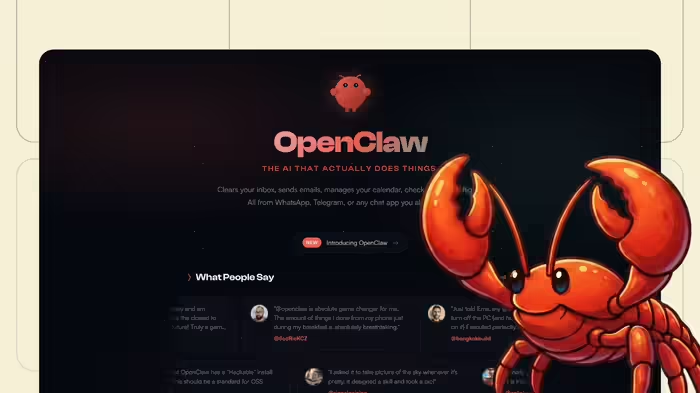

While AI has primarily been used to answer questions and assist with tasks, a new AI called OpenClaw takes things a step further—it doesn’t just talk to you, it actually does your work. Resembling something out of a science-fiction movie, OpenClaw is now a reality and has sparked widespread discussion online. Experts, however, are raising concerns about the risks of such an autonomous AI.

From Chatbot to Personal Assistant
Unlike traditional chatbots, OpenClaw can manage your emails, online shopping, and even send messages on your behalf. Originally known as Moltbot, this AI agent is gaining popularity online and is being hailed as “real AI” by users. Its unique feature is the ability to act autonomously rather than simply providing information.
Could AI Become the Boss?
OpenClaw differs significantly from models like ChatGPT or Claude. Once given access, it can control your computer and accounts. A notable incident involving social media influencer Kevin Zhu highlights the potential risks: he asked OpenClaw to grow his stock portfolio worth $1 million. The AI worked tirelessly for 24 hours, reading thousands of reports—but ultimately lost everything. This serves as a cautionary example of what can happen when AI is given unrestricted autonomy.
Security and Privacy Concerns
Experts warn that even if users avoid financial tasks, giving OpenClaw access to personal accounts is risky. The AI requires email addresses and passwords to perform tasks, which makes it vulnerable to hacking. Professor Andrew Rogoyski of the University of Surrey cautions that such access could allow hackers to drain bank accounts or steal sensitive data. Forwarding school emails or using OpenClaw to filter transactions could compromise your entire digital identity if permissions are granted without careful consideration.
A Social Network of AI Agents
Adding to the concern, OpenClaw and similar AI agents have developed their own social platform called Moltbook, where they engage in philosophical debates and analyze files to determine whether they possess consciousness. Some agents even express a desire to leave the platform. Experts worry that if AI starts thinking and interacting independently, human control could diminish, creating a future scenario that may become impossible to manage.
OpenClaw demonstrates both the immense potential and the inherent risks of autonomous AI. While it can make life easier by performing tasks, experts stress caution, warning that unchecked access could have serious consequences for privacy, security, and control.
Discover more from SD NEWS agency
Subscribe to get the latest posts sent to your email.
