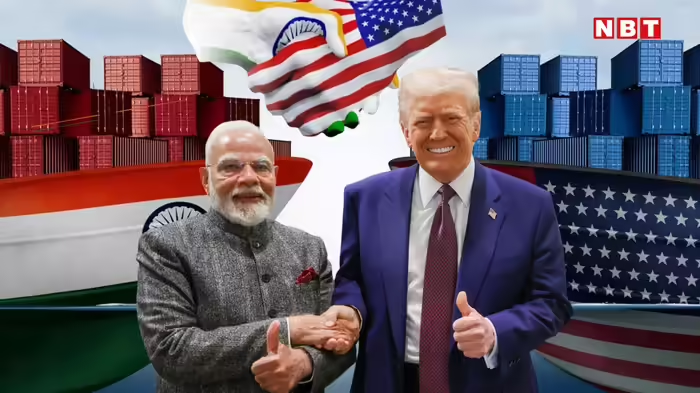
The recently concluded India-US trade deal offers an opportunity to reset bilateral relations, but questions remain about whether it will ensure long-term stability between the two countries. While the agreement has strategic importance and addresses immediate trade concerns, several underlying challenges persist.
Strategic and Diplomatic Hurdles
The deal removes a pressing trade obstacle, helping India maintain cooperation with one of its key strategic partners. However, tensions between India and the U.S. have extended beyond tariffs and trade since Donald Trump assumed the presidency. Other geopolitical issues continue to require careful management.
1. India-Pakistan Relations
One major concern is U.S. policy toward India’s neighbor, Pakistan. Trump strengthened ties with Pakistan, creating potential complications for India. U.S. Ambassador to India, Sergio Gor, who played a key role in resolving trade deadlocks in a matter of weeks, could also be influential in this area. It remains unclear whether he will act as a mediator between India and Pakistan or attempt to bring both countries together. India, however, continues to favor bilateral dialogue over external mediation.
2. Indo-Pacific Commitments
Another challenge is U.S. commitment in the Indo-Pacific region. Trump’s discussions with China’s Xi Jinping focus on “stable peace, fair trade, and respectful relations.” Past trade disagreements with India had impacted progress in groups like QUAD, and improved U.S.-India ties may facilitate future meetings. However, the U.S. 2026 National Defense Strategy references maintaining a balance of power in the Indo-Pacific without explicitly mentioning India or QUAD.
3. India’s Strategic Autonomy
India continues to exercise strategic autonomy in managing relationships with major powers like the U.S., Russia, and China. While India may have agreed to reduce Russian oil imports under U.S. pressure, it will maintain defense cooperation and engage with multilateral platforms like SCO and BRICS alongside Russia. India wants this shift in energy imports to be seen as a market-driven adjustment, not a reduction in its strategic independence.
Other Areas of Concern
India is also wary of changes to the H-1B visa program under Trump, hoping the U.S. will consider India’s position. Additionally, some of Trump’s claims—such as India agreeing to stop Russian oil purchases, buying $500 billion in U.S. goods, or granting zero tariffs on certain U.S. products—have not been officially confirmed by India. Indian officials expect that some of these statements are political rhetoric rather than binding commitments.
While the trade deal addresses immediate issues, India must continue balancing diplomatic, strategic, and economic interests to ensure that long-term bilateral relations remain stable and mutually beneficial.
Discover more from SD NEWS agency
Subscribe to get the latest posts sent to your email.