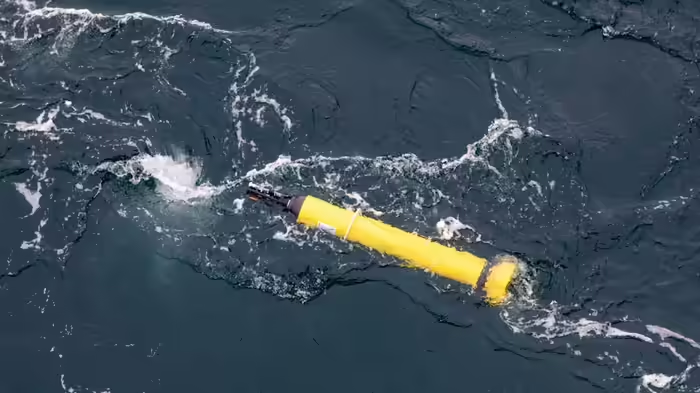
In an extraordinary scientific feat, a small robot disappeared beneath the ice of Antarctica for nearly nine months and returned with vital data that has left researchers astounded.
The robot, known as an Argo float, is designed to measure ocean temperature and salinity. Scientists had deployed it near the Totten Glacier, where melting could raise sea levels by up to 3.5 meters. Shortly after deployment, the robot drifted away under the ice, leaving scientists worried about the mission. Its return from beneath the Denman and Shackleton ice shelves not only surprised the researchers but also provided crucial insights into ice melt patterns.
What is the Argo Float Robot?
According to reports, the Argo float is an automated robot that drifts through oceans, diving up to two kilometers deep. It surfaces roughly every ten days to transmit data via satellite. Globally, thousands of such floats operate, monitoring oceanic conditions. For the first time, this robot gathered temperature data every five days from beneath the ice shelves of East Antarctica, providing unparalleled scientific information.
The Scientific Goal
Ice shelves act as floating barriers, preventing land-based glaciers from sliding into the ocean. Scientists wanted to determine whether warm water was reaching the undersides of these ice shelves, which could accelerate melting and raise sea levels. The Denman Glacier alone contains enough ice to raise global sea levels by 1.5 meters if melted completely, while the Shackleton Ice Shelf is the northernmost shelf of East Antarctica.
A 300-Kilometer Under-Ice Journey
After drifting from Totten Glacier, the robot reached the Denman region, where it detected warm water moving beneath the ice—a potential cause for melting. It then navigated beneath the ice for nine months, covering 300 kilometers and recording data around 200 times. Despite being under the ice without GPS access, the robot measured ice thickness whenever it came into contact with the ice, allowing scientists to reconstruct its path using satellite data.
Key Findings and Future Plans
The data revealed that Shackleton Ice Shelf remains safe for now, as no warm water has reached it, but Denman Glacier is already experiencing under-ice warming, which could accelerate melting. Together, Totten and Denman glaciers have the potential to raise sea levels by up to five meters.
This breakthrough will help scientists refine climate models and better predict future sea-level rise. Encouraged by the success, researchers are planning to deploy more robotic explorers in Antarctica to continue monitoring ice shelves and ocean interactions.
This mission highlights the incredible role of autonomous technology in understanding climate change and the hidden dynamics beneath the world’s ice sheets.
Discover more from SD NEWS agency
Subscribe to get the latest posts sent to your email.