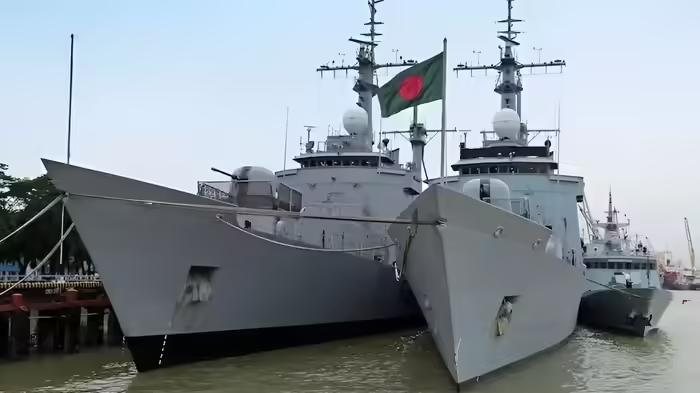
Amid rising anti-India sentiment within Bangladesh, fresh tensions have emerged between the two neighbours—this time in the Bay of Bengal, raising serious concerns over maritime security and the safety of Indian fishermen.
While anti-India protests continue on land in Bangladesh, recent incidents at sea suggest a troubling pattern. Over the past two months, Indian authorities have observed an increase in Bangladeshi fishing vessels operating close to, and allegedly within, Indian maritime boundaries.
The situation escalated sharply on December 15, when a Bangladeshi Navy patrol vessel allegedly rammed an Indian fishing trawler carrying 16 fishermen, causing it to capsize. The incident has sparked outrage and heightened fears among fishing communities operating near the international maritime boundary.
Bangladeshi Naval Ship Allegedly Operated Without Lights
According to reports, the Bangladeshi naval vessel was sailing without navigation lights, making it difficult for the Indian trawler to spot it at night. The Indian vessel, identified as FB Parmita, overturned after the collision, throwing all fishermen into the sea.
The Indian Coast Guard managed to rescue 11 fishermen early the next morning, but five fishermen remain missing. The incident has intensified anxiety among Indian fishermen who depend on these waters for their livelihood.
Fisherman Allegedly Killed with Spear-Like Weapon
Disturbing allegations have emerged from survivors, claiming that after the collision, there was an attempt to kill all fishermen on board. According to a report by The Times of India, one fisherman, identified as Rajdul Ali Sheikh, was allegedly killed using a spear-like weapon.
Survivors stated that the Bangladeshi vessel rammed the trawler while fishermen were preparing to cast their nets, leaving them with no time to escape.
Conflicting Claims Over Maritime Boundary
Following a complaint by the Sundarbans Marine Fishermen Workers’ Union, police have initiated an investigation. However, the Indian Coast Guard has not yet officially confirmed whether the Indian trawler crossed into Bangladeshi waters or whether the Bangladeshi naval ship entered Indian territory.
Bangladesh, meanwhile, has rejected the allegations, calling the reports misleading and asserting that its patrol vessel was 12 nautical miles away from the site of the incident at the time.
Strategic and Political Context
The incident comes at a sensitive time, with Bangladesh scheduled to hold elections in February next year. Since the fall of the Sheikh Hasina government, Bangladesh—under the interim leadership of Muhammad Yunus—has been seen asserting greater influence in the Bay of Bengal.
Earlier statements attributed to Yunus, in which he described Bangladesh as the “guardian of the sea” in the region, have already raised eyebrows in New Delhi and added to concerns over Bangladesh’s maritime posture.
Experts Call It a Provocative Act
Foreign affairs expert Raman Murthy described the incident as a deliberate provocation, suggesting that Bangladesh may be seeking confrontation with India to deflect attention from its internal political challenges.
“This looks like an attempt to provoke India. For Bangladesh, confrontation may be seen as a way to escape its current political and economic predicament,” Murthy wrote on social media.
Growing Maritime Concerns
The episode has ignited debate across social media and policy circles, with calls for clear demarcation enforcement, diplomatic engagement, and stronger protection for Indian fishermen operating near international waters.
As investigations continue, the incident underscores the fragile state of India-Bangladesh relations and the urgent need for restraint, transparency, and dialogue to prevent further escalation—both on land and at sea.
Discover more from SD NEWS agency
Subscribe to get the latest posts sent to your email.