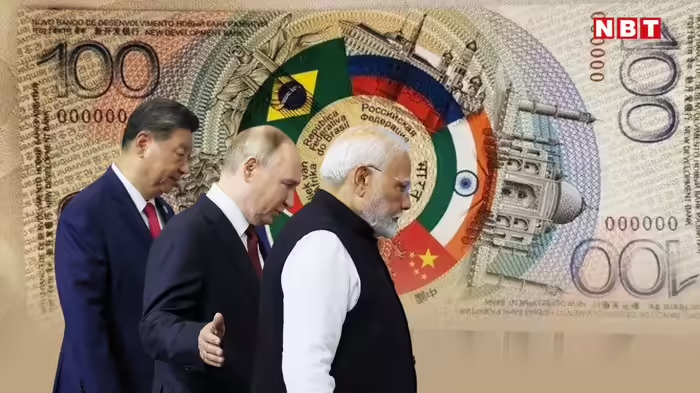
New Delhi: As global financial dynamics shift, India is taking the lead in creating a BRICS Digital Payment System that could reduce reliance on the U.S. dollar and the SWIFT network. Contrary to misconceptions, this initiative is not aimed at creating a single BRICS currency. Instead, it seeks a practical, interoperable framework enabling direct trade settlements in national digital currencies.
India to Host BRICS Summit
The BRICS Summit, scheduled in India later this year, is expected to lay the foundation for this global financial infrastructure. The system will link national digital currencies, including India’s Digital Rupee, China’s Digital Yuan, and Russia’s Digital Ruble, through a secure interoperable network. This ensures each currency retains independence, eliminating dependence on the dollar or any other foreign currency.
Key Objectives of the BRICS Payment System
- Reduce Dollar Dependence: By enabling direct settlements in national currencies, BRICS countries can bypass the U.S.-dominated SWIFT system.
- Neutral, Multi-Polar Infrastructure: The system is designed to remain neutral and multipolar, not dominated by any single country, including China.
- Faster, Cost-Efficient Transactions: Settlements will be quicker, transaction costs lower, and exposure to unilateral Western sanctions minimized.
- Diplomatic Leverage: The system allows member countries to conduct trade independently of Western economic pressures, reinforcing sovereignty.
India’s Leadership and Experience
India has leveraged its Unified Payments Interface (UPI) as a domestic model, demonstrating efficient real-time cross-border payments. UPI has already facilitated international trade links, such as with the UAE, and serves as a blueprint for a BRICS-level interoperable digital payment network. Brazil’s PIX and China’s digital financial infrastructure also provide complementary frameworks for this initiative.
Addressing Misconceptions
India has clarified that the BRICS payment system is not about “de-dollarization” theatrics or creating a new currency to rival the U.S. dollar. Instead, it focuses on practical solutions for cross-border trade settlements, empowering member nations to use their own currencies efficiently without surrendering financial autonomy.
Timeline and Implementation
While the system is in development, most Central Bank Digital Currencies (CBDCs) remain in pilot stages. Initial steps involve establishing bilateral links, which will gradually integrate into a full BRICS network. India’s prior success with UPI demonstrates the feasibility of this approach, paving the way for a secure, multi-currency BRICS financial ecosystem.
This move positions India at the forefront of a new financial architecture, giving BRICS nations an alternative to traditional Western-led payment systems and challenging long-standing U.S. dollar dominance in global trade.
Discover more from SD NEWS agency
Subscribe to get the latest posts sent to your email.