
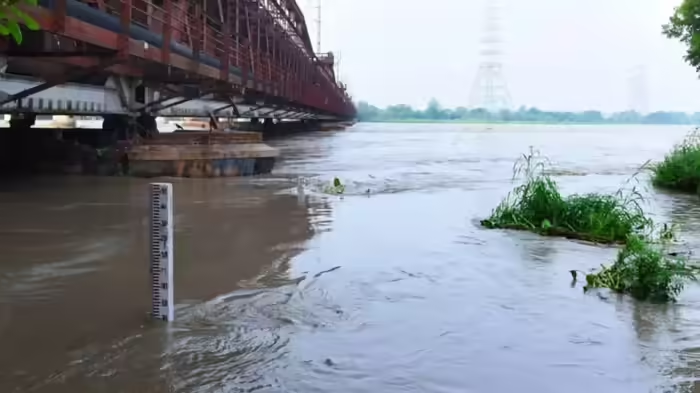
The Delhi government is planning to establish monitoring stations along a 22-kilometer stretch of the Yamuna River to closely track water flow during the summer months. One station will be set up near the Hathini Kund Barrage, and another at the river’s end point in Delhi.
Officials highlight that, to maintain adequate flow during summers, Hathini Kund Barrage in Haryana should release 2,500 cubic feet per second (cusecs) of water daily. However, in recent years, only 352–400 cusecs have been released, reducing flow from Wazirabad Barrage to Okhla Barrage and potentially creating a water crisis in Delhi.
According to a Water Board report, the Yamuna’s flow remains critically low for nine out of twelve months, which not only threatens the river’s ecosystem but also impacts Delhi’s water availability.
The government will invest ₹1.56 crore in setting up the two monitoring stations. This includes ₹35.48 lakh for high-tech equipment, ₹9.05 lakh for boat-based monitoring, and ₹18.12 lakh for manpower.
In addition, the Delhi government plans to install 32 online monitoring stations to track treated water from drains and direct discharges into the Yamuna. These stations will continuously send real-time data to the Delhi Pollution Control Committee (DPCC) server, enabling timely detection of pollution and water management issues.
The monitoring initiative is crucial because reduced water releases from Haryana during summers significantly lower the river’s flow. The new stations will allow authorities to track exactly how much water is released upstream and how much reaches Delhi, helping manage water resources and prevent a potential crisis.
Discover more from SD NEWS agency
Subscribe to get the latest posts sent to your email.