
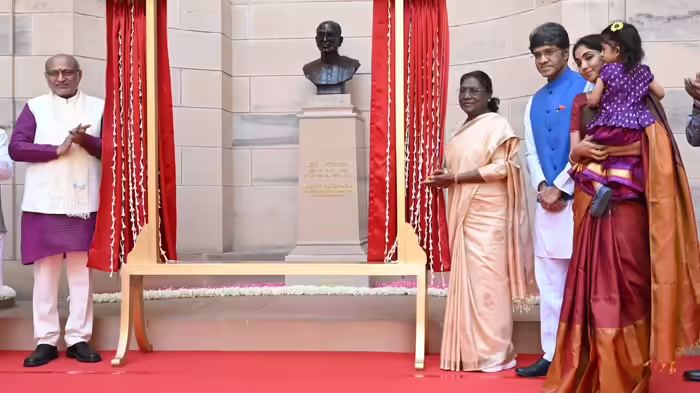

In a symbolic move reflecting India’s continued effort to shed vestiges of its colonial past, President Droupadi Murmu on Monday unveiled the statue of C. Rajagopalachari at Rashtrapati Bhavan, replacing the statue of British architect Edwin Lutyens.

The unveiling ceremony took place during the inaugural ‘Rajaji Utsav,’ an event dedicated to commemorating the life and legacy of Rajagopalachari, popularly known as Rajaji.
PM Modi Calls It an “Extraordinary Initiative”
Prime Minister Narendra Modi described the festival as an “extraordinary initiative” that highlights the many dimensions of Rajaji’s contribution to the nation. Reposting details of the event on social media platform X, the Prime Minister urged citizens to visit the exhibition and draw inspiration from Rajaji’s life and ideals.
Earlier, in his February 22 address during the ‘Mann Ki Baat’ programme, the Prime Minister emphasized the importance of freeing India from what he termed a “colonial mindset.” He recalled his call for “Panch Pran” (five pledges) during the Azadi Ka Amrit Mahotsav celebrations, one of which was liberation from the mentality of servitude inherited from colonial rule.
“Today, the country is moving beyond symbols of slavery and giving due importance to elements rooted in India’s own culture and civilizational heritage,” the Prime Minister said.
Who Was C. Rajagopalachari?
C. Rajagopalachari was independent India’s first and only Indian Governor-General, serving after Lord Mountbatten. A freedom fighter, statesman, scholar, and close associate of Mahatma Gandhi, Rajaji was known for his intellectual independence, moral discipline, and commitment to public service.
He viewed public office not as a position of power, but as an instrument of service. His contributions to governance, ethics in public life, and national thought continue to resonate decades after independence.
A Shift in Symbolism
The Prime Minister noted that, unfortunately, statues of British administrators remained installed at Rashtrapati Bhavan even after independence, while several national icons did not receive similar recognition. The removal of Edwin Lutyens’ statue, the British architect associated with the design of New Delhi’s central administrative district, marks a significant symbolic transition.
The ‘Rajaji Utsav’ exhibition at Rashtrapati Bhavan will be open to visitors from February 24 to March 1, offering the public an opportunity to explore Rajaji’s legacy and reflect on India’s evolving national identity.
The decision is widely seen as part of a broader national narrative that seeks to celebrate indigenous icons and reinterpret historical spaces through the lens of independent India’s values and aspirations.
Discover more from SD NEWS agency
Subscribe to get the latest posts sent to your email.
