
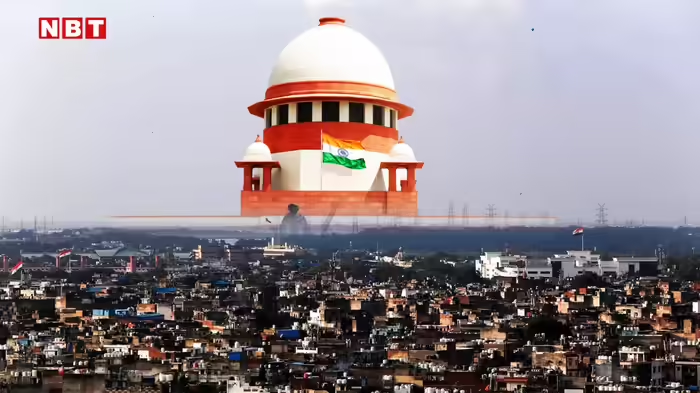
New Delhi: The Supreme Court has expressed deep concern over the living conditions of Dalits who fled Pakistan due to religious persecution and settled in India. The court emphasized that granting Indian citizenship alone is not sufficient; the government must also ensure that these individuals have access to dignified housing.
In a significant order, the apex court temporarily stayed eviction drives targeting Dalit residents in Delhi and directed the government to submit its response within four weeks. The court’s remarks came amid fears that residents near Majnu Ka Tilla, close to Signature Bridge, might face displacement.
Ensuring Housing and Rehabilitation
A bench comprising Justices M.M. Sundresh and N. Koteshwar Singh underlined that alongside citizenship, the state has a responsibility to provide proper rehabilitation and housing facilities, enabling these communities to lead a dignified life. The court imposed a stay on any ongoing eviction drives or development projects in the area that could threaten the residents’ homes.
Relief for 250 Dalit Families
The Supreme Court’s intervention has provided significant relief to approximately 250 Dalit families—around 1,000 people—who have lived in the area for years. The threat of new eviction drives had created uncertainty over their housing and future.
Background
These Hindu Dalit families fled Pakistan after facing religious persecution and lived in India as refugees for several years. They were later granted Indian citizenship under the Citizenship Amendment Act (CAA). The court has now asked the government to clarify what permanent measures are in place to settle them safely and ensure that they are not left vulnerable even after gaining citizenship.
Discover more from SD NEWS agency
Subscribe to get the latest posts sent to your email.