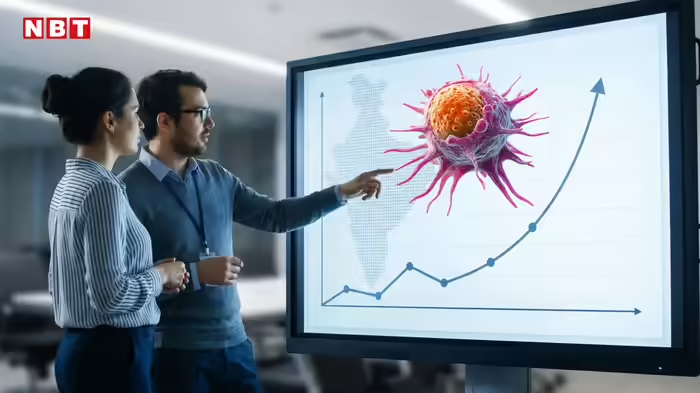
India is facing a looming public health challenge as experts warn that the number of cancer patients could increase sharply over the next two decades. Currently, around 1.5 million new cancer cases are reported each year, but by 2045, this number is projected to reach 2.5 million. Health specialists emphasize that combating this rise will require a multi-pronged approach, including prevention, early detection, affordable treatment, and emotional support for patients.
Early Detection and Prevention Key
The warning came from the Indian Cancer Society (ICS), Delhi, during a media briefing on World Cancer Day. The experts highlighted that while the Union Budget 2026-27 includes customs duty exemptions on certain cancer drugs and measures to promote domestic biopharma production, reducing drug costs alone will not be sufficient. Many patients still arrive at hospitals with advanced-stage cancer, limiting the effectiveness of treatment.
Jyotsna Govil, Chairperson of ICS Delhi, stressed that preventing cancer and detecting it early is critical. “The budget has made treatment more affordable, but our goal must be to ensure patients do not reach a stage where these drugs are their only lifeline,” she said. She also emphasized the role of responsible media in dispelling misinformation, encouraging timely check-ups, and spreading accurate awareness in communities.
Expert Insights on Early Detection and Treatment
Dr. Nitesh Rohatgi, Senior Director (Oncology) at Fortis Memorial Hospital, noted that age-appropriate screening, early diagnosis, and advanced testing technologies significantly improve recovery rates while reducing overall treatment costs.
Highlighting systemic challenges, Dr. Urvashi Prasad, former Director at NITI Aayog, pointed out regional disparities, inadequate cancer-related data, and financial barriers that delay detection and treatment. She called for better coordination between the central and state governments and continuous investment in cancer care.
Supporting Patients Beyond Treatment
Renuka Prasad, Secretary of ICS Delhi and a cancer survivor, discussed the emotional, physical, and financial burdens on patients and families. She outlined community-focused initiatives such as large-scale screening programs, Prashanti Healing and Rehabilitation Centers, and digital outreach through the “Rise Against Cancer” app to support patients.
Integrating Cancer Care into Universal Health Coverage
Dr. Monica Puri, public health consultant and former WHO official, emphasized that cancer prevention, early diagnosis, and treatment must be integrated into primary healthcare systems to ensure equitable access. She recommended lifestyle interventions such as avoiding tobacco and alcohol, maintaining a healthy diet, and regular exercise as key preventive measures. Expanding early detection services at government health centers, including in remote areas, is also vital.
Advances in Screening Technologies
Dr. Rohatgi highlighted new diagnostic tools that enable early detection, including:
- Mammography for breast cancer
- Pap smear tests for cervical cancer
- Colonoscopy for colorectal cancer
Early identification through these methods can catch cancer before it progresses, making treatment easier and more effective. Dr. Prasad also advocated for a national cancer strategy encompassing all states and improved insurance schemes to help patients manage treatment costs.
Experts agree that addressing the expected surge in cancer cases will require coordinated action across prevention, screening, treatment, and patient support, making it one of India’s most pressing public health priorities for the coming decades.
Discover more from SD NEWS agency
Subscribe to get the latest posts sent to your email.