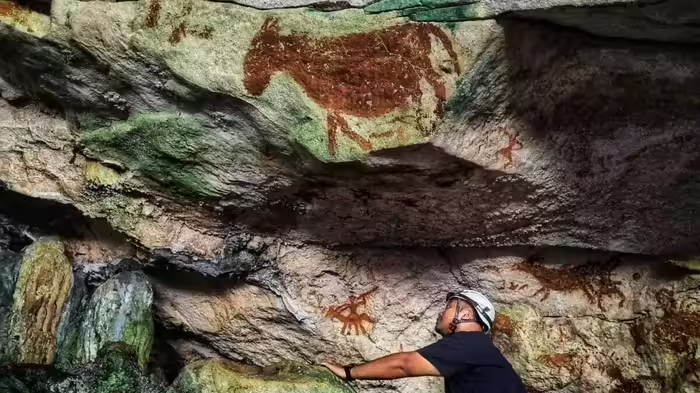
Jakarta: Archaeologists in Indonesia have uncovered what is now considered the world’s oldest rock art. Found on the walls of a limestone cave along the coast of Sulawesi, these hand-made artworks date back approximately 67,800 years, offering unprecedented insights into early human migration.
The discovery sheds light on how humans first migrated toward Australia. The study, conducted by a team of Indonesian and Australian archaeologists, was published in the journal Nature. Researchers believe the artwork represents a deep-rooted cultural tradition that has remained largely hidden until now.
Insights from Ancient Hand Stencils
The cave walls feature red hand stencils, crafted with pointed fingertips, providing crucial information about the early presence of humans in the region. Maxim Aubert, co-author of the study and archaeologist at Griffith University, Australia, said: “What we are seeing in Indonesia is the gradual revelation of a very ancient cultural tradition, which until recently remained invisible to us.”
A Cultural Center, Not a Temporary Shelter
The team explored caves on Muna Island in Sulawesi province. The quantity and age of the rock art suggest that these were not mere temporary shelters. “This was a cultural hub where early humans lived, traveled, and expressed ideas through art for thousands of years,” Aubert explained.
Unique Style and Global Significance
Researchers noted that the stencils were likely made using red ochre. The stylized fingers, resembling claws, are unique to Sulawesi. The study indicates that these stencils are over a thousand years older than similar hand stencils discovered in caves in Spain.
In recent years, Sulawesi and Borneo have emerged as key regions for understanding early human migration. While cave paintings in these areas had been discovered decades ago, advances in dating techniques now allow scientists to determine their true age—ranging from a minimum of 40,000 years to over 51,000 years.
This discovery provides a rare glimpse into the life, creativity, and migration patterns of early humans in Southeast Asia, challenging previous assumptions about the origins of rock art and human settlement.
Discover more from SD NEWS agency
Subscribe to get the latest posts sent to your email.