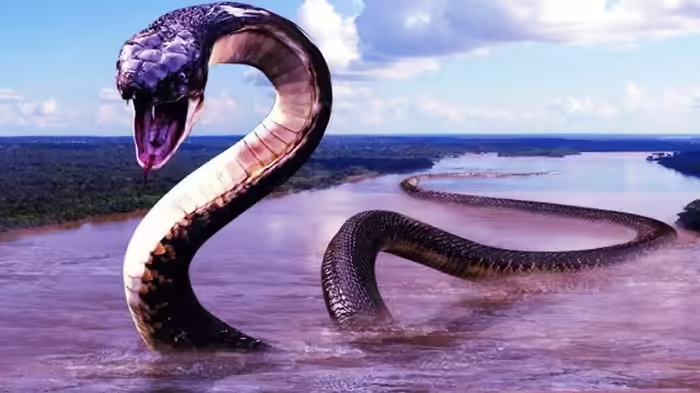
WASHINGTON: Scientists have identified what is believed to be the largest sea snake ever, a colossal predator that ruled the oceans millions of years before humans appeared. Named Paleophis colossius, this enormous snake inhabited shallow marine environments rather than the deep seas or coral reefs, and likely preyed on formidable predators such as sharks.
A Prehistoric Ocean Apex Predator
According to researchers, Paleophis colossius lived 56 to 34 million years ago during the Eocene epoch, occupying the top position in the marine ecosystem of its time. Its enormous size has astonished scientists: while most modern sea snakes measure only 2–3 meters, Paleophis colossius could grow between 8 and 12 meters in length.
Only its vertebrae have been found, yet these fossils are unusually large. A 2018 study compared these bones to those of all known modern snakes—both terrestrial and marine—and confirmed that Paleophis colossius far surpassed any living species in size. The findings challenge earlier assumptions about the scale and power of prehistoric marine predators.
Shallow Seas Near Africa
Evidence suggests this gigantic snake thrived in shallow marine habitats near what is now northern Africa, a region formerly submerged under a sea known as the Trans-Saharan Seaway. This area was tropical and far warmer than present-day temperatures, providing an ideal environment for large predators.
Feeding Habits and Hunting
While there is no direct proof of its diet, scientists infer that Paleophis colossius likely hunted large prey. Its enormous size suggests it needed substantial food, potentially including large fish, sharks, and marine reptiles like dyrosaurids. If its skull was as flexible as that of modern snakes, it may have been capable of swallowing very large animals whole.
How It Differs from Modern Sea Snakes
Today, sea snakes are relatively small and unthreatening. The yellow-bellied sea snake, one of the longest modern species, reaches a maximum of about 3 meters, far smaller than Paleophis colossius. For comparison, the Titanoboa, the largest known land snake, was only slightly longer and is now extinct.
The discovery of Paleophis colossius provides a rare glimpse into prehistoric oceans, revealing that marine reptiles of the Eocene were larger, stronger, and far more fearsome than previously imagined.
Discover more from SD NEWS agency
Subscribe to get the latest posts sent to your email.