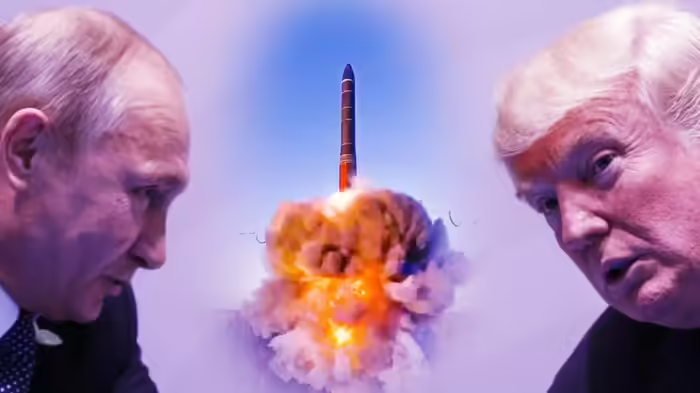
Moscow: The New START treaty, the last major nuclear arms control agreement between the United States and Russia, officially expired on Thursday, February 5. With the treaty’s expiration, limits on the deployment of nuclear warheads are lifted, raising concerns of a renewed arms race between the world’s two largest nuclear powers.
About the Treaty
The Strategic Arms Reduction Treaty (New START), renewed in 2010, placed restrictions on the number of strategic nuclear weapons that the US and Russia could possess. It also required the exchange of information regarding nuclear force movements and allowed on-site inspections of missiles with short notice. The treaty was originally signed by then-US President Barack Obama and Russian President Dmitry Medvedev.
However, neither the current US administration under Donald Trump nor the Russian government under Vladimir Putin showed interest in extending the deal. Trump had stated that if the treaty ended, so be it, while Russia announced that it would no longer be bound by limits on its nuclear warheads.
Global Concerns
The United Nations has expressed deep concern over the treaty’s expiration. UN Secretary-General António Guterres warned that the risk of nuclear weapons use is extremely high at present and urged both countries to renew the deal. Similarly, Pope Francis emphasized that both nations must take all possible steps to prevent a new nuclear arms race.
Potential for a Renewed Arms Race
Analysts warn that the expiry of New START could weaken the foundation of the Nuclear Non-Proliferation Treaty (NPT), whose review is scheduled later this year. The NPT obligates non-nuclear states to refrain from developing nuclear weapons. With the US and Russia now free to expand their arsenals, other countries without nuclear capabilities may feel compelled to reconsider their commitments, potentially triggering a global proliferation of nuclear weapons.
US-Russia Nuclear Competition Already Escalating
Reports indicate that the arms race is already underway. Last year, Russia tested the Poseidon nuclear-powered intercontinental supertorpedo and nuclear-powered cruise missiles. Meanwhile, the US has accelerated plans for the “Golden Dome” defense system to counter long-range threats. Experts also warn that China, which has rapidly expanded its nuclear arsenal in recent years, could join this renewed competition, further heightening global security risks.
Implications for the World
With the US and Russia controlling roughly 87% of the world’s nuclear weapons, the absence of treaty limits introduces unprecedented uncertainty. The expiration of New START signals a dangerous moment in global security, one that could prompt other nations to enhance their nuclear capabilities, increasing the risk of a new arms race with far-reaching consequences for international peace.
Discover more from SD NEWS agency
Subscribe to get the latest posts sent to your email.