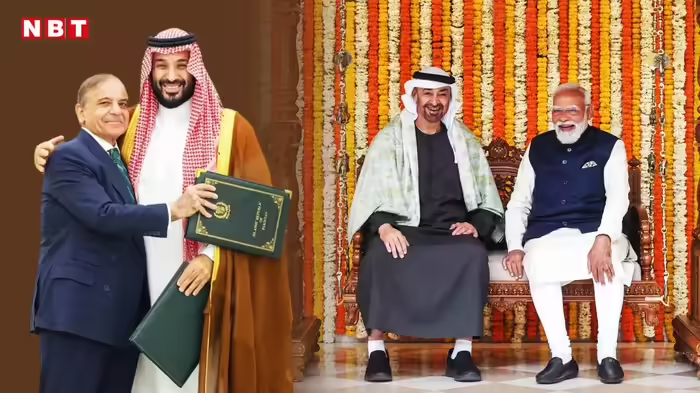
Abu Dhabi/New Delhi: The sudden three-hour visit of UAE President Sheikh Mohammed bin Zayed Al Nahyan (MBZ) to New Delhi has raised eyebrows in diplomatic circles. Normally, such state visits are planned months in advance, but MBZ’s trip was confirmed just 3–4 days prior. Analysts say the visit carried deep strategic and political significance, signaling shifts in West Asian diplomacy amid growing regional instability.
Here are the five key reasons behind MBZ’s urgent Delhi visit:
1. Strategic Partnership Amid Regional Turmoil
The visit occurred when US threats of military action against Iran loomed large, relations between Saudi Arabia and UAE were strained, and Pakistan, Saudi Arabia, and Turkey were working toward an Islamic NATO-style defense alliance. In this context, MBZ’s visit to India signals a strategic partnership bridging South Asia and the Middle East, providing UAE stability and sending a clear message to Saudi Arabia.
2. India as a Trusted Partner
With US President Donald Trump’s initiatives in Gaza and broader Middle East plans, UAE needed a reliable and independent partner. India, maintaining historically good relations with both Iran and the US, emerges as a credible mediator capable of helping reduce regional tensions.
3. Countering the Saudi-Pakistan Defense Deal
Last September, Saudi Arabia and Pakistan signed a mutual defense pact stipulating that an attack on one country would be considered an attack on both. With Turkey likely to join, UAE views Pakistan’s growing alignment with Saudi Arabia skeptically. India offers UAE a stable alternative for defense and strategic collaboration.
4. Geopolitical Concerns in Yemen and Somaliland
UAE and Saudi Arabia have been at odds over Yemen, especially after UAE-backed groups faced Saudi airstrikes in southern Yemen. Additionally, Israel’s recent recognition of Somaliland has heightened regional sensitivities. India provides UAE with a strategic partner for navigating such geopolitical challenges.
5. Defense and Nuclear Collaboration
During his visit, MBZ and PM Modi signed a Letter of Intent (LoI) to formalize a long-term strategic defense partnership, focusing on joint manufacturing, technology transfer, and capability development. Talks also included civil nuclear cooperation, covering large reactors, small modular reactors (SMRs), and plant operations.
Bonus: India’s Role in Gaza Peace Plan
The visit also aligns with US-led initiatives for Gaza stabilization, where both India and UAE have been invited to participate in a “Board of Peace for Gaza,” chaired by Donald Trump. India’s inclusion would highlight its growing diplomatic influence in the Middle East, underscoring why UAE views New Delhi as a key pillar of its regional strategy.
Earlier, UAE’s Crown Prince and Defense Minister had also visited India, and high-level missions by External Affairs Minister S. Jaishankar and Army Chief General Upendra Dwivedi in UAE have set the stage for a deepening defense relationship. Analysts say the full extent of this partnership will unfold in the coming months.
Discover more from SD NEWS agency
Subscribe to get the latest posts sent to your email.