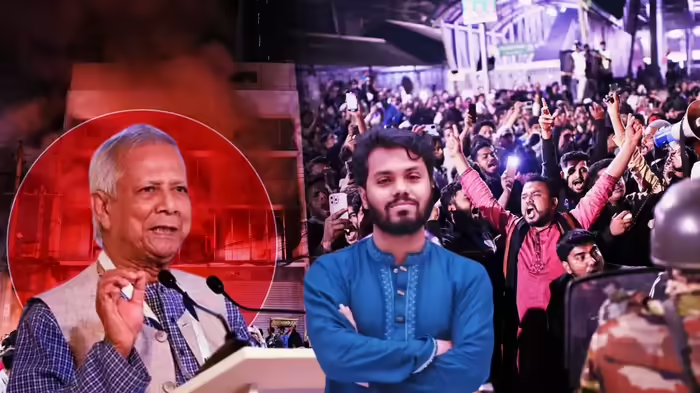
Dhaka/New Delhi: The assassination of Bangladeshi student leader Sharif Usman Hadi has triggered widespread unrest and turned a shocking crime into a major political and diplomatic controversy. Within hours of Hadi’s death, violent protests erupted across Bangladesh, with mobs setting fire to media offices in Dhaka and other cities, and hurling stones at the residence of India’s Deputy High Commissioner. Anti-India slogans and incendiary posts have flooded social media, raising concerns about escalating tensions.
Protesters claim that Hadi’s attackers fled to India, though neither the interim government led by Muhammad Yunus nor the student leaders making these claims have provided evidence. Despite the lack of proof, there have been attempts to frame the killing as “India-sponsored,” heightening political toxicity in Bangladesh ahead of upcoming elections. Rallies have been organized in which provocative statements against India are being made, suggesting that unseen forces may be trying to inflame anti-India sentiment across the nation.
Political groups like the National Citizen Party (NCP) have amplified these narratives. Sarjis Alam, a senior NCP leader, warned that the Indian High Commission in Dhaka would remain closed until India extradites the alleged attackers, stating, “We are at war!” Earlier this week, hundreds of demonstrators marched under the banner of “July Oikya” demanding that Sheikh Hasina be brought back from India, shouting anti-India slogans.
India has firmly rejected all such accusations. Official sources stressed that making public allegations against India without proper investigation not only harms bilateral relations but also fuels violence within Bangladesh. Indian authorities have summoned the Bangladeshi envoy to register strong protest over the ongoing anti-India rhetoric.
Geopolitical experts indicate that the anti-India narrative may indirectly benefit Muhammad Yunus, whose interim government faces mounting challenges ahead of potential elections in February. The country’s economic instability, combined with protests by Awami League supporters, could make stoking fears of an “external enemy” a tactic to divert public attention. Analysts also point to the possibility of Pakistan’s intelligence agency, ISI, orchestrating elements of the unrest to inflame anti-India sentiment, given Hadi’s pro-Pakistan and anti-India stance.
Experts warn that without a transparent, impartial, and immediate investigation into Hadi’s assassination, the case risks being exploited as a political weapon, further destabilizing Bangladesh and straining its ties with India.
Discover more from SD NEWS agency
Subscribe to get the latest posts sent to your email.