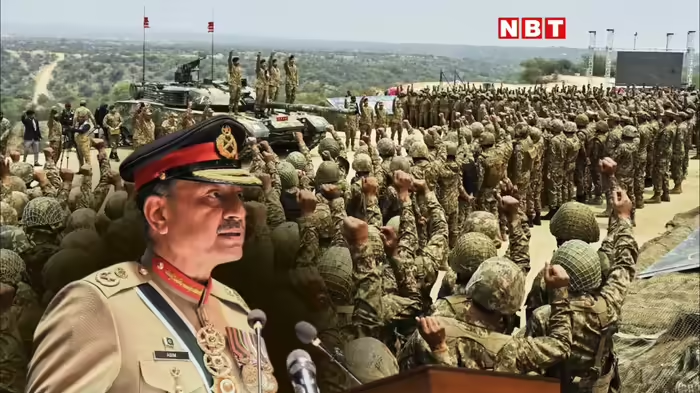
Islamabad: General Asim Munir, Pakistan’s first-ever Chief of Defence Forces (CDF), has rapidly emerged as the country’s most powerful military figure. Known for his hardline, ideological stance, Munir has repeatedly targeted India in his public statements, particularly focusing on Kashmir. Analysts have labeled this approach the “Munir Doctrine”, highlighting its emphasis on aggression, military resolve, and Islamic nationalism.
Aggressive Rhetoric Against India
Since assuming the CDF role, Munir has made several statements signaling a hardline posture toward India. Speaking to the media, he warned:
“India must not be deceived. Pakistan’s response in the May military clash was strong, and next time it will be even more severe. Everyone should understand Pakistan’s mindset—it is backed by the unwavering resolve of our armed forces.”
Earlier this year, in April, Munir referred to Kashmir as Pakistan’s “jugular vein”, emphasizing its centrality to national strategy. He reiterated this in August while speaking in the U.S., underscoring the ideological and strategic importance Pakistan places on the region. In February, addressing troops in PoK, he openly stated that three wars have already been fought for Kashmir—and if needed, Pakistan is ready to fight ten more.
Nuclear Threats and Escalation
Munir has also issued veiled nuclear warnings. In October, at Pakistan Military Academy, he declared that if a new wave of hostility emerges, Pakistan will retaliate far beyond adversaries’ expectations, inflicting military and economic costs “beyond imagination.”
The Ideological Core of the Munir Doctrine
Experts note that Munir’s statements are not merely military posturing. They are part of a broader attempt to position Pakistan’s army as the guardian of national identity and Islamic values. Kashmir remains central to this doctrine, symbolizing both strategic leverage and ideological resolve.
Lieutenant General Rakesh Sharma (Retd.), Chair of Excellence at India’s United Services Institution, notes that Munir’s aggressive posture reflects internal failures within Pakistan’s civilian and military leadership. According to Sharma, weak governance, economic mismanagement, and near-civil war conditions have created an environment where escalating tensions with India is a convenient diversion.
Experts conclude that while India should monitor Munir’s threats carefully, they do not signal an immediate existential risk. Munir’s rhetoric largely serves domestic political and military purposes, aimed at consolidating power and diverting attention from Pakistan’s internal challenges.
Discover more from SD NEWS agency
Subscribe to get the latest posts sent to your email.