Washington, January 24, 2026 – The United States has hinted at the possibility of lifting the 25 percent tariff imposed on Indian imports of Russian crude oil, according to U.S. Treasury Secretary Scott Bessent. This development comes amid ongoing global geopolitical pressures and India’s efforts to diversify its energy sources.
Bessent’s Statement
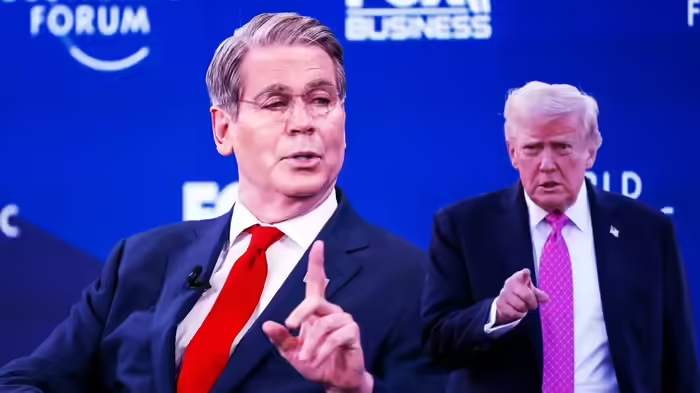
Speaking at the World Economic Forum in Davos, Bessent described the U.S. tariff as a strategic tool aimed at reducing India’s dependence on Russian energy. “The tariff was intended to curb India’s reliance on Russian oil, and this objective is now being achieved,” he said. Bessent added that the significant drop in India’s Russian oil purchases opens a pathway for reconsidering the 25 percent tariff.
Currently, Indian products face a combined 50 percent U.S. tariff, with half of it (25 percent) specifically targeting Russian oil imports. The Treasury Secretary did not specify the timeline or exact details of how the tariff reduction would be implemented.
India’s Reduced Russian Oil Purchases
Reports indicate that Indian refiners have significantly scaled back purchases of Russian crude. In January, only three companies – Indian Oil Corporation Limited (IOCL), Bharat Petroleum Corporation Limited (BPCL), and Nayara Energy – imported Russian oil. Reliance Industries Limited (RIL), the largest Indian buyer of Russian crude, halted purchases in 2026, while Mangalore Refinery and Petrochemicals Limited (MRPL) stopped buying from November 2025. HPCL-Mittal Energy Limited (HMEL) imported just one shipment in December, and Hindustan Petroleum Corporation Limited (HPCL) did not purchase any Russian crude in December or January.
Strategic Implications
Bessent’s remarks suggest a potential strategic shift in U.S. trade policy toward India, especially as India prepares to sign what is being billed as the world’s largest trade deal with the European Union next week. The move could relieve pressure on India’s energy sector and signal a recalibration of U.S. policy amid growing trade and geopolitical competition with Europe.
Discover more from SD NEWS agency
Subscribe to get the latest posts sent to your email.