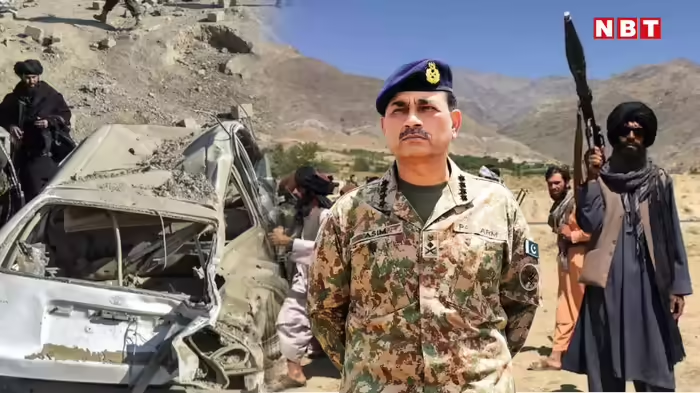
Islamabad/New Delhi: The Tehreek-e-Taliban Pakistan (TTP) has announced a major reorganization of its structure for 2026, including the formation of an “Air Force Unit” under the leadership of Salim Haqqani, raising concerns over a potential surge in terrorist attacks across Pakistan.
The TTP has declared Kashmir as a new “Wilayat” (province) within its organizational framework, marking a first in the group’s history. Additionally, the Gilgit region has been split into two separate Wilayats – Diamer and Darrel – further expanding the group’s operational footprint.
Surge in Pakistan Attacks
Over the past two to three years, terrorist incidents in Pakistan’s Khyber Pakhtunkhwa and Balochistan have sharply increased. In November 2022, the TTP officially abrogated its ceasefire agreement with the Pakistani government and has since targeted military and police officials. Pakistani authorities have begun labeling the TTP as “Fitna-al-Khawarij,” alleging that the group is receiving support from India—a claim rejected by Afghan Taliban authorities, as the TTP is reportedly operating from Afghanistan.
Key Organizational Changes in TTP
- Formation of the Air Force Unit under Salim Haqqani (likely focused on drone operations).
- Establishment of two new supervision zones: Western Zone (Balochistan) and Central Zone, each with separate military commanders.
- Kashmir and Gilgit-Baltistan incorporated as “shadow provinces”.
- Leadership changes across all military zones; Ehsanullah EP appointed Southern Military Zone chief.
- Hillal Ghazi named deputy head of the Central Military Zone.
- Political Commission reshuffled, with Azmatullah Mehsud now its head.
The Air Force Unit is expected to enhance coordination and drone capabilities, potentially increasing the scale and sophistication of attacks in Pakistan. The TTP has reportedly released its leadership list for 2026 operations, signaling a well-structured strategy for the coming year.
Implications for India
With Kashmir now included in the TTP’s organizational plan, India faces a potential security challenge. The TTP may collaborate with other terrorist groups to establish a foothold in the region, increasing the risk of cross-border terrorism. Security agencies in India are urged to remain vigilant, as the group’s operational expansion could impact both Pakistan and Indian territories.
The TTP remains a highly dangerous organization, and the developments underscore the ongoing threat posed by extremist networks in South Asia.
Discover more from SD NEWS agency
Subscribe to get the latest posts sent to your email.