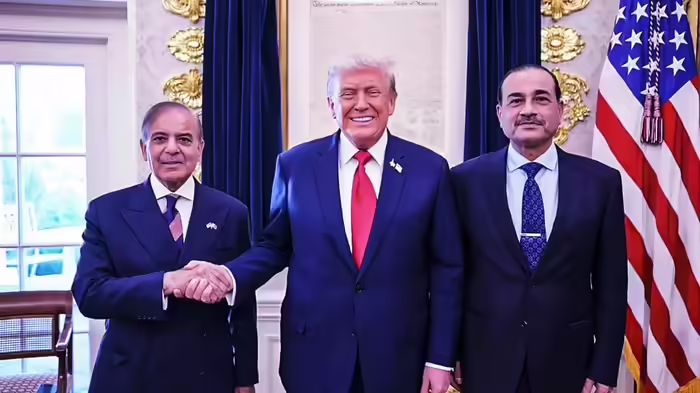
The United States has added Pakistan to a list of 75 countries subject to visa restrictions, a move announced by U.S. Secretary of State Marco Rubio. The decision, related to immigration policy, has sparked widespread criticism of Pakistani official Aseem Munir.
Flattery Didn’t Work
Following last May’s tensions with India, Pakistan had lavished praise on former U.S. President Donald Trump, even nominating him for the Nobel Peace Prize. Pakistani officials publicly applauded Trump and his comments about Pakistan’s army chief. Yet, in early January, Pakistan was included in the U.S. visa ban list. Coincidentally, on the same day, Aseem Munir and Pakistan’s ISI Director-General signed a crypto-mining deal with Trump’s World Liberty Financial. Many Pakistanis now question whether Munir was prioritizing personal gain over national interests, as Trump’s stance on Pakistan remained unchanged.
Public Backlash in Pakistan
Social media users have voiced frustration, questioning the benefits of praising Trump. The situation worsened when Pakistan’s Interior Minister Mohsin Naqvi claimed on X that the country’s passport ranking had improved from 126th to 98th. Journalists and analysts, including Benazir Shah of Geo News and Husain Haqqani, quickly challenged these claims, highlighting that Pakistan’s passport remains one of the world’s weakest. Haqqani noted that the apparent improvement is due to more countries sharing similar rankings and does not reflect substantive progress.
Visa Ban Sparks Humor and Criticism
Pakistani social media users have mocked the situation, highlighting the irony of nominating Trump for a Nobel Prize while landing on the visa-restricted list. One user posted a photo of Prime Minister Shehbaz Sharif with Trump at last year’s Sharm El-Sheikh Peace Summit, commenting, “Trump just froze our visas.” Another questioned, “Pakistan is banned, India isn’t—what did Aseem Munir gain?” A separate post shared a video of Information Minister Ataullah Tarar joking about Pakistan’s “strong” passport, writing, “Apparently, we’ve become too strong.”
Analysis: What the Visa Ban Indicates
Tech analyst Husain Nadeem noted on X that Pakistan may not remain long on the restricted list, but the decision highlights two things: first, Pakistan’s position in U.S. foreign policy is tenuous, being grouped with troubled or adversarial nations; second, it underscores the futility of interpreting Trump’s public praise and personal compliments as a strategic win or a deepening of bilateral ties.
The visa ban has sparked debates within Pakistan about the effectiveness of diplomatic flattery and the limitations of personal outreach in influencing U.S. foreign policy.
Discover more from SD NEWS agency
Subscribe to get the latest posts sent to your email.