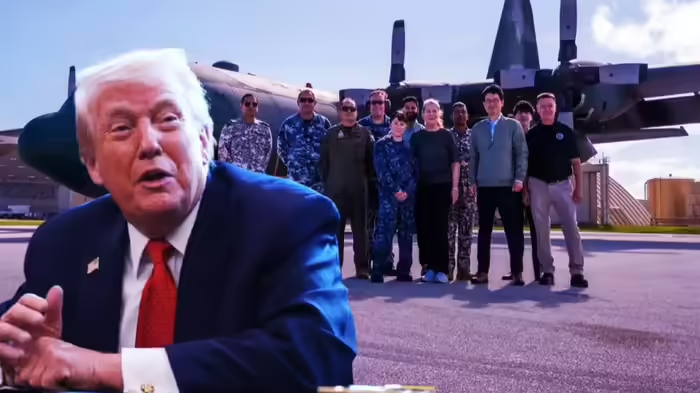
As tensions with China intensify, former US President Donald Trump has signed the National Defence Authorization Act (NDAA) 2026, emphasizing deeper military engagement with India and reaffirming Washington’s commitment to a free and open Indo-Pacific. The policy marks a strategic pivot, aimed at countering China’s growing influence while strengthening ties with key regional partners.
The NDAA 2026, which legally authorizes nearly $900 billion in defence and security spending, highlights India as a crucial partner in both bilateral and multilateral military cooperation. It calls for enhanced collaboration through the Quadrilateral Security Dialogue (QUAD), which brings together India, the US, Japan, and Australia, to promote regional stability, conduct joint military exercises, and strengthen humanitarian assistance and disaster relief capabilities.
Trump’s India Engagement: From Tensions to Strategic Partnership
Earlier in 2025, US-India relations faced strains as tariffs were imposed on Indian imports and Washington’s outreach to Pakistan expanded, delaying India’s planned hosting of the QUAD meeting. The NDAA, however, signals a potential reset, positioning India as a key pillar of US strategy in the Indo-Pacific, despite past diplomatic friction.
“The NDAA underscores India’s critical role in maintaining a balance against China’s assertive policies,” said a US defence official. The law also directs the Secretary of Defense to expand partnerships in military training, defense trade, and regional security cooperation.
Nuclear and Multilateral Dimensions
The legislation includes provisions for US-India civil nuclear cooperation, ensuring ongoing review and implementation of the 2008 Civil Nuclear Agreement. Additionally, the NDAA adopts a firm stance on multilateral groups such as BRICS, identifying attempts by adversaries to use such forums to counter US influence. India’s dual role—as a QUAD member and a BRICS participant—positions it at the center of Washington’s Indo-Pacific strategy.
Strategic Implications
Experts believe the NDAA 2026 reinforces the US commitment to India as a strategic partner amid China’s rising assertiveness. With recent successful joint military exercises at Andersen Air Force Base in Guam, the policy sets the stage for expanded cooperation, signaling that India will remain central to US efforts in preserving regional stability.
The key question remains whether Washington can repair the earlier strains in its relationship with India and rebuild trust, particularly as the Indo-Pacific emerges as a critical theater for global security in 2026.
Discover more from SD NEWS agency
Subscribe to get the latest posts sent to your email.