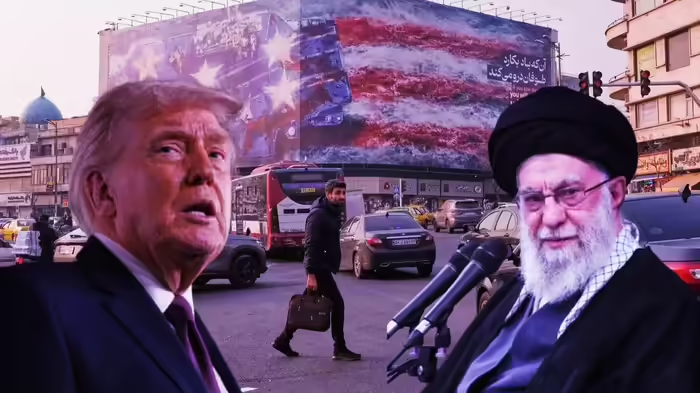
Tehran: Rising tensions between the United States and Iran have sparked global concern, as the US dispatches additional warships to the Middle East while the aircraft carrier USS Abraham Lincoln remains on station. Countries like Qatar and Turkey are reportedly attempting to mediate and prevent escalation.
Speculation continues over whether former US President Donald Trump will order a military strike on Iran. Reports suggest that US plans target Iran’s nuclear facilities, missile stockpiles, and the Islamic government itself, with potential ground operations inside Iran also under consideration. Pentagon chief Pete Hegseth stated that the US military is ready to implement any orders issued by the president.
Iran’s Retaliation Options
Iranian authorities have warned of an immediate and severe response to any US attack. Officials have specifically threatened missile strikes on US aircraft carriers. Experts note that while Iran may appear militarily weaker, it possesses the capability to inflict significant damage. Possible retaliatory measures include:
- Missile Strikes on US and Israeli Bases: Iran can launch missiles at American military installations in the Middle East and target Israel directly. Reports indicate Iran has over 2,000 ballistic missiles and an extensive drone arsenal, which was demonstrated during last year’s conflict with Israel.
- Proxy Warfare: Iran may mobilize proxy groups in the Gulf and beyond, including Hezbollah and Houthi forces, to open new fronts. The Houthis could target commercial shipping in the Red Sea, while proxies in Syria and Iraq could engage US or allied forces.
- Maritime Disruption: Iran could deploy naval mines along key trade routes, especially in the strategic Strait of Hormuz between Iran and Oman, through which nearly 20% of global LNG exports and 20–25% of oil and petroleum products pass annually. Iran has previously conducted exercises in mine deployment.
- Negotiation via Third Parties: While direct talks with Trump appear unlikely, Iran’s Supreme Leader Ayatollah Khamenei may engage mediators like Qatar or Turkey to negotiate if a full-scale conflict threatens the regime’s survival. Analysts, however, caution that any compromise would not affect Iran’s core strategic programs, meaning missile development and support for proxy groups would continue.
US officials are acutely aware of Iran’s capabilities. Secretary of State Marco Rubio recently noted that 30,000–40,000 US troops are stationed across eight or nine bases within the range of Iranian one-way UAVs and short-range ballistic missiles, posing a significant threat to US forces.
The situation remains tense, with both sides signaling preparedness for confrontation, while regional and international actors continue urgent efforts to prevent escalation.
Discover more from SD NEWS agency
Subscribe to get the latest posts sent to your email.