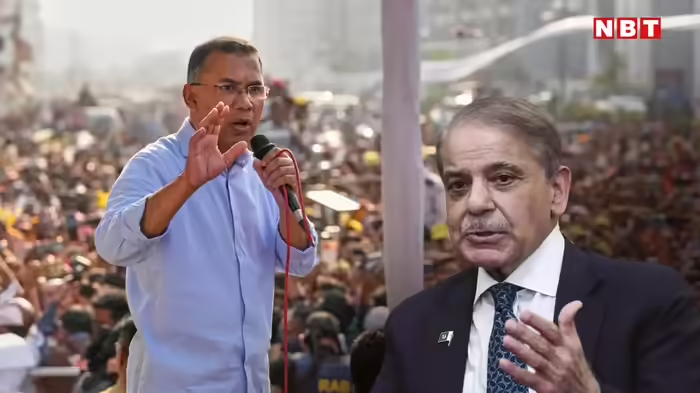
Dhaka, February 13, 2026: After nearly two decades, the Bangladesh Nationalist Party (BNP) is poised to return to power, with Tarique Rahman expected to become the country’s next Prime Minister. His victory not only marks a political milestone for BNP but also raises questions about the future of Bangladesh’s relations with Pakistan.
Unofficial results indicate that BNP has crossed the majority mark of 151 seats and is leading in several others. At 60, Tarique Rahman returns to power after 17 years in self-imposed exile, having returned from London on December 25. The interim government led by Muhammad Yunus is expected to facilitate a smooth transition of power.
Tarique Rahman: A Profile
Tarique Rahman is the eldest son of former President and military leader General Ziaur Rahman and three-time Prime Minister Khaleda Zia. During BNP’s last tenure in the early 2000s, he was widely regarded as a parallel power center, influencing cabinet appointments and government contracts. U.S. diplomatic cables released by WikiLeaks referred to him as the “Dark Prince,” linking him to episodes of political violence in Bangladesh.
Foreign Policy Outlook
During the BNP election campaign in Sylhet this January, Rahman emphasized a nationalist, Bangladesh-first approach, famously declaring: “Neither Delhi, nor Rawalpindi — Bangladesh First.” He also criticized Jamaat-e-Islami for siding with Pakistan during the 1971 Liberation War. Key foreign policy positions outlined during the campaign include:
- Strengthening bilateral ties with India on the basis of equality and mutual respect.
- Maintaining a balanced relationship with China and India.
- Reviving SAARC initiatives and pursuing ASEAN membership.
- Continuing engagement with Pakistan, while keeping a cautious and pragmatic stance.
Implications for Bangladesh-Pakistan Relations
Rahman’s ascent presents a mixed picture for Islamabad. Historically, BNP has maintained ties with Pakistan and previously governed in coalition with the Pakistan-friendly Jamaat-e-Islami. However, Rahman’s nationalist stance and his “Bangladesh First” policy signal a more independent, balanced foreign policy that may reduce Pakistan’s influence. Moreover, Jamaat-e-Islami, once an ally, is now politically sidelined, further constraining Pakistan’s leverage in Dhaka.
In short, while engagement with Pakistan will continue, BNP under Tarique Rahman is likely to adopt a cautious, pragmatic approach, balancing regional relations while asserting Bangladesh’s sovereignty and national priorities.
Discover more from SD NEWS agency
Subscribe to get the latest posts sent to your email.