
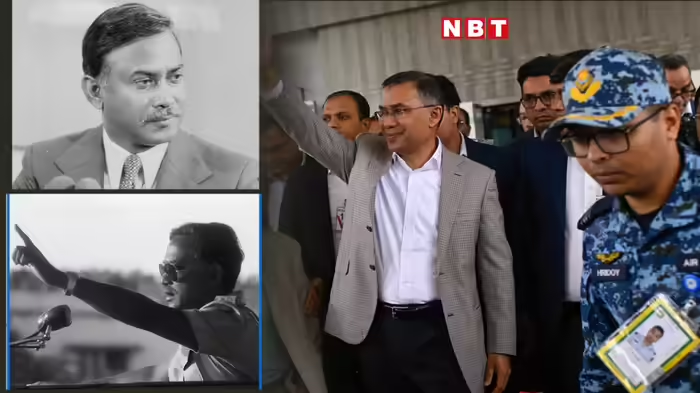
Dhaka: As Bangladesh gears up for the upcoming elections in February, Tarique Rahman, leader of the Bangladesh Nationalist Party (BNP), has emerged as a prominent figure in the political landscape. After 17 years abroad, Tarique returned to Bangladesh on 28 December and paid homage at the grave of his father, Ziaur Rahman, the former army chief and president who was assassinated in 1981. Tarique is widely regarded as a potential candidate for the country’s next Prime Minister.
The Assassination of Ziaur Rahman
Born in 1936 in Bogra, Bengal, Ziaur Rahman joined the military at the age of 17. He earned distinction both as a military officer and as the President of Bangladesh. On 30 May 1981, during an official visit to Chattogram, Zia was assassinated in a sensational attack at the Circuit House, a secure and prestigious accommodation chosen for the president. The attack was carried out by rebel military officers using submachine guns, rocket launchers, and grenade-firing rifles.
Despite resistance from Zia’s security guards, the attackers breached the building, firing indiscriminately. The president was fatally shot in his room, while most of his guards were killed during the 20-minute assault. The perpetrators then returned to the Chattogram cantonment, and a brief coup was declared. However, the coup failed within hours, as army chief Hussain Muhammad Ershad regained control and loyalist forces suppressed the rebellion. A military tribunal swiftly tried the officers involved, resulting in the execution of twelve officers within three weeks.
The motive behind the assassination stemmed from internal discontent within the army, including disputes over promotions, transfers, and grievances among officers who had fought in the 1971 Liberation War versus those returning from Pakistan.
Zia’s Legacy and BNP Leadership
Ziaur Rahman played a pivotal role in Bangladesh’s 1971 Liberation War, famously announcing the country’s independence on the radio. Following independence, he became army chief and later assumed the presidency in 1977. He founded the Bangladesh Nationalist Party (BNP) in 1978, restoring multi-party politics in the country.
After Zia’s assassination, his widow Khaleda Zia took the reins of BNP, successfully navigating the party to political prominence and eventually serving as Prime Minister. Now, due to Khaleda Zia’s ill health, Tarique Rahman is leading the BNP in the upcoming elections, aiming to continue his father’s political legacy and potentially assume the role of Prime Minister.
Discover more from SD NEWS agency
Subscribe to get the latest posts sent to your email.