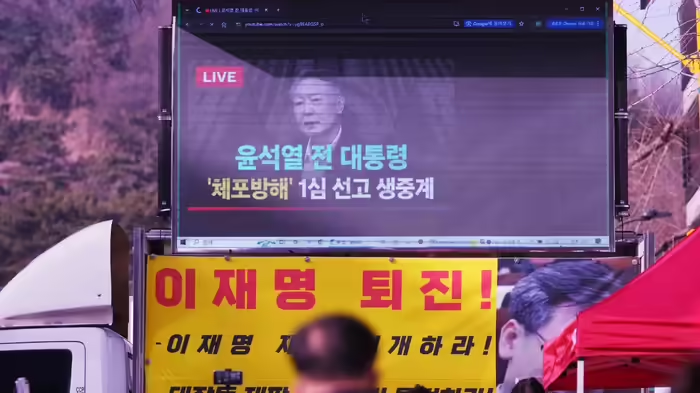
A South Korean court on Friday sentenced former President Yoon Suk Yeol to five years in prison, marking the first verdict in eight criminal cases filed against him. The charges stem from his brief imposition of martial law in December 2024 and other related allegations, which ultimately led to his impeachment and removal from office.
The case has drawn widespread attention, as Yoon’s declaration of martial law had triggered nationwide protests and calls for his resignation. Among the most serious accusations against him is that the move amounted to inciting rebellion against the state.
Details of the Verdict
The Seoul Central District Court found Yoon guilty of ignoring lawful attempts to take him into custody, fabricating the martial law declaration, and bypassing legally mandated full cabinet meetings. Justice Baek Dae-Hyun emphasized the “need for a strict sentence” as Yoon had shown no remorse and continued to offer “implausible excuses” for his actions. The judge also noted the necessity of compensating for the disruption to law and order caused by Yoon’s decisions.
Yoon has maintained that he never intended to enforce long-term military rule. According to his defense, the order was meant solely to alert the public to perceived threats from a liberal-controlled parliament obstructing his agenda.
Potential Future Sentencing
Investigators, however, viewed Yoon’s actions as an attempt to consolidate and prolong his hold on power, and he faces additional charges including rebellion, abuse of power, and other criminal offenses. An independent lawyer has petitioned for the death penalty in the rebellion case, which is expected to be adjudicated next month. Legal experts, however, suggest this is highly unlikely. Criminal law specialist Park Sung-Bae noted that the court could impose a life sentence or a term of 30 years or more, but South Korea has had a practical moratorium on capital punishment since 1997, and executions are rarely carried out.
Yoon retains the right to appeal the verdict, and he has not issued a public response to the ruling.