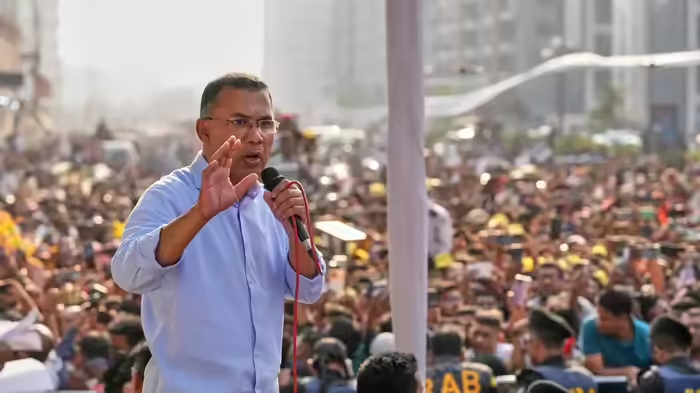
Dhaka: Following a decisive victory in the February 12 parliamentary elections, the Bangladesh Nationalist Party (BNP), led by Tarique Rahman, is poised to return to power after two decades. With a two-thirds majority, Rahman’s appointment as Prime Minister appears almost certain. As the new government prepares to take office, all eyes are on how Dhaka’s leadership will navigate relations with India.
BNP sources indicate that several India-related issues will top the agenda, including the presence of former Prime Minister Sheikh Hasina on Indian soil, cross-border killings, and the renewal of the Ganga water treaty.
1. Sheikh Hasina’s Presence in India
BNP sources told The Hindu that Hasina’s presence in India will be a major concern. She has reportedly remained on Indian soil since resigning on August 5, 2025, following violent student protests in Bangladesh. BNP officials argue that her continued presence complicates normalization of bilateral ties, as she has often commented on political developments in Bangladesh from Indian territory.
2. Cross-Border Killings
Another key issue is violence along the India-Bangladesh border. BNP insiders pointed out that killings carried out by India’s Border Security Force (BSF) have become a sensitive issue, often triggering strong public reactions in border districts. BNP members advocate a softer approach, suggesting that suspected smugglers should be arrested rather than shot, emphasizing that the border is legally defined and indiscriminate use of force is unwarranted.
3. Renewal of the Ganga Water Treaty
The renewal of the Ganga water agreement is another critical issue. The treaty is set to expire in December 2026. BNP sources claim that the technical teams scheduled to meet over the past two years have not convened, and Bangladesh will push for a fair and equitable implementation of the treaty.
4. Easing of Medical Visa Restrictions
Medical visas are expected to remain a prominent bilateral issue. BNP officials describe the current Indian medical visa issuance as insufficient and are likely to request relaxation. They argue that easing visa restrictions fosters stronger people-to-people connections and reduces the need for Bangladeshis to seek treatment in countries like China. The cultural affinity between the two nations makes India a preferred destination for medical care, they note.
As Tarique Rahman prepares to lead Bangladesh, managing these India-related issues will be among the government’s first diplomatic challenges, with significant implications for regional stability and cooperation.
Discover more from SD NEWS agency
Subscribe to get the latest posts sent to your email.