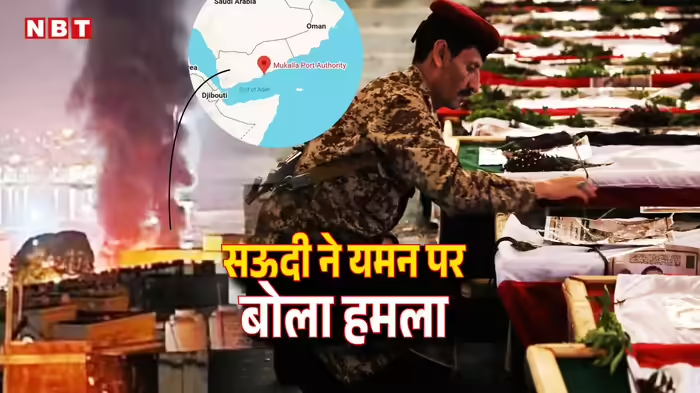
Riyadh/Dhaka: Tensions between two of the Gulf’s most powerful Muslim nations, Saudi Arabia and the United Arab Emirates, have reached a boiling point. Saudi Arabia launched a significant airstrike on the Yemeni port city of Mukalla, targeting a shipment of weapons sent from the UAE for the separatist Southern Transitional Council (STC). The Saudi Ministry of Defense confirmed the strike on Tuesday, signaling a deepening rift between Riyadh and Abu Dhabi over influence in Yemen.
Details of the Strike
According to the Saudi Press Agency, the airstrike was carried out by coalition forces early Tuesday morning as two vessels carrying weapons and combat vehicles arrived from Fujairah, UAE. The statement emphasized that the operation targeted arms posing a “threat to security and stability.” The UAE has yet to issue an official response.
Geopolitical Context
Mukalla, located in Yemen’s Hadramout region, was recently seized by the UAE-backed STC. Analysts note that Saudi Arabia’s strike serves as a warning to STC forces to halt their advance and vacate Hadramout and neighboring Mahra province. The STC had previously expelled Saudi-supported National Shield Forces from these regions and continues to press forward with UAE military support. While Riyadh and Abu Dhabi are traditionally close allies, their competing agendas in Yemen and the broader Gulf region are straining relations.
Calls for Calm Amid Escalation
The internationally recognized Yemeni government has urged a reduction in tensions in southern provinces, including Hadramout and Al-Mahra. State-run Saba News Agency reported that the government welcomed Saudi Arabia’s “clear, balanced, and responsible stance” regarding recent developments. Authorities warned that any unilateral military action outside the Presidential Leadership Council (PLC) would be considered “an unacceptable source of tension.”
Failed Negotiations and STC Ambitions
Despite a joint Saudi-UAE delegation visiting Aden on December 12 to negotiate a troop withdrawal, the STC has continued recruiting local forces and consolidating control over southern Yemen. The STC, established in 2017 with UAE support, demands independence for southern Yemen and recently took control of territories with 80% of the region’s oil reserves. Saudi Arabia has criticized the move as an “unjustified escalation.”
Yemen War Background
Yemen has been embroiled in civil war since 2014, with Iran-backed Houthi rebels controlling the north, while the Saudi-led coalition supports the internationally recognized government (now PLC). The UAE-backed STC, once integrated into the PLC in 2022, has now asserted control over strategic southern territories, escalating tensions between its patrons, Saudi Arabia and the UAE.
Implications
This latest military action underscores the growing friction between Saudi Arabia and the UAE in Yemen and raises concerns about further destabilization in the Gulf and Muslim-majority regions. Observers warn that unless diplomatic channels succeed, clashes could trigger wider regional ramifications.