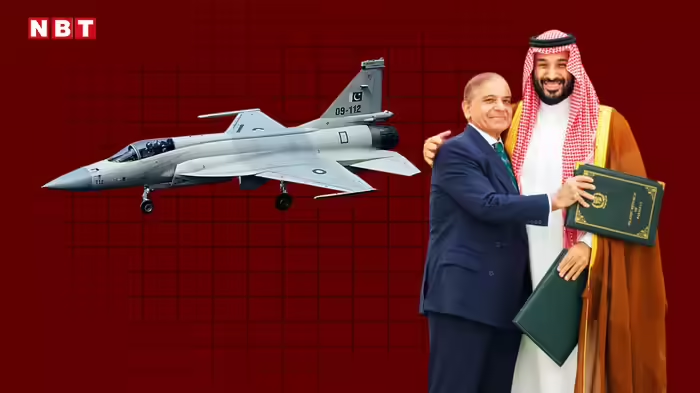
Riyadh/Islamabad: Pakistan and Saudi Arabia are reportedly in discussions over a potential deal involving the JF-17 fighter jet, a multirole combat aircraft developed jointly by Pakistan and China, with Pakistan holding a 35% stake and China 65%. According to Reuters, the proposed arrangement could see Saudi Arabia purchasing JF-17 jets while forgiving Pakistan’s $2 billion debt.
The talks come amid ongoing military maneuvers by Saudi Arabia in Yemen against the UAE, and shortly after Riyadh signed a defense pact with Islamabad ensuring mutual support in case of an attack. The discussions are also unfolding against the backdrop of heightened geopolitical tensions in the Middle East, including Israel’s recent military action in Qatar.
The JF-17 and Its Strategic Significance
The JF-17, built with Chinese collaboration, is a fourth-generation fighter aircraft. Some experts have expressed skepticism about the deal’s feasibility, particularly as Saudi Arabia is simultaneously negotiating with the United States to acquire the advanced F-35 stealth fighter jets. Reports indicate that, beyond debt forgiveness, Riyadh could spend an additional $2 billion on equipment and upgrades for the aircraft.
Pakistan and Saudi Arabia have maintained close ties for decades, with Riyadh often extending financial support during Islamabad’s economic crises. In 2018, Saudi Arabia provided Pakistan with an emergency $6 billion loan, including a $3 billion deposit in Pakistan’s central bank and $3 billion in oil supplies. Over the past eight years, Riyadh has repeatedly rolled over these deposits to help Pakistan avoid default.
Skepticism Remains
Despite ongoing discussions, some analysts have questioned the practicality of the JF-17 deal. Bakir Sajjad, former senior fellow at the Wilson Center and international affairs journalist for Dawn, expressed doubts, citing Saudi Arabia’s interest in the F-35 and the potential political risk of acquiring Chinese-Pakistani aircraft. Sajjad wrote on Twitter: “Why would Riyadh opt for a relatively light fourth-generation fighter when it is focused on F-35s? Would they risk U.S. displeasure by buying a plane developed with Pakistan and China, instead of acquiring Chinese J-35/J-20 jets directly? Something doesn’t add up.”
A Wider Pattern of Arms Deals
The discussions over JF-17 jets come as both nations respond to shifting geopolitical dynamics in the Middle East. In December 2025, Reuters reported that Pakistan had signed a $4 billion-plus deal to supply 16 JF-17 fighters and other military equipment to General Khalifa Haftar’s Libyan National Army.
As Pakistan seeks financial relief and Saudi Arabia evaluates strategic military options in the region, the JF-17 deal could emerge as a bold geopolitical maneuver, reflecting the intricate balancing act in Islamabad-Riyadh relations.
Discover more from SD NEWS agency
Subscribe to get the latest posts sent to your email.