
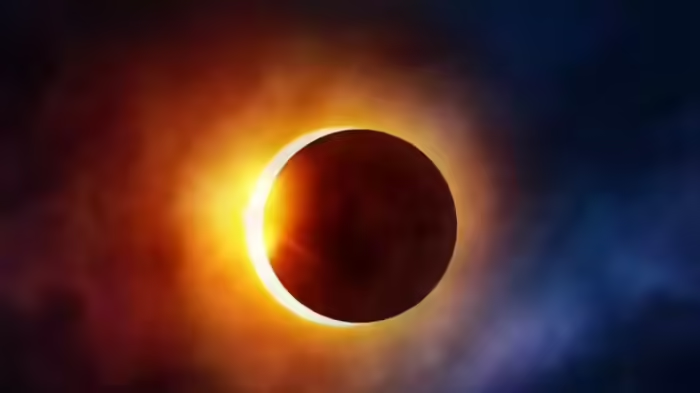
Astronomers around the world are eagerly anticipating a rare celestial spectacle—a total solar eclipse set to occur on August 2, 2027. According to NASA, this will be the longest total solar eclipse of the 21st century, plunging affected regions into deep darkness for 6 minutes and 23 seconds. Such a prolonged eclipse is so rare that it will not be witnessed again for the next 100 years.
During this extraordinary event, the Moon will completely cover the Sun’s corona, creating an evening-like atmosphere in the middle of the day. Temperatures may drop by 5 to 10 degrees Celsius, and wind patterns could shift temporarily. Astronomers view this as a rare opportunity to study the mysteries of the cosmos. Typically, total solar eclipses last less than three minutes, making the 2027 eclipse an unprecedented event for skywatchers.
The prolonged duration is due to a rare alignment of celestial bodies. On August 2, the Earth will be at its farthest point from the Sun, causing the Sun to appear slightly smaller in the sky. At the same time, the Moon will be near its closest point to Earth, appearing larger and blocking the Sun’s light for an extended period. This combination makes the eclipse exceptionally long-lasting, providing a once-in-a-lifetime spectacle.
Space.com reports that an eclipse of this duration will not occur again until the year 2114, making August 2, 2027, a date to mark for generations of astronomy enthusiasts.
Discover more from SD NEWS agency
Subscribe to get the latest posts sent to your email.