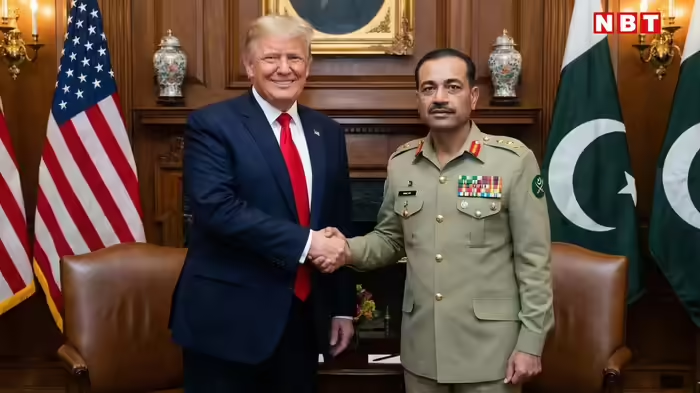
ISLAMABAD/WASHINGTON: Newly surfaced emails reveal that Pakistan actively pitched multiple proposals to the Trump administration, offering strategic incentives in an effort to strengthen bilateral ties with the United States. The correspondence, sent on May 14, 2025, came shortly after hostilities with India had ceased and was addressed to Paul W. Jones, a former U.S. ambassador to Pakistan and now an International Affairs Advisor at the law and lobbying firm Square Patton Boggs in Washington.
Pakistan Projects Itself as a Strategic Partner
Attached to the email was a policy document titled “A New Pakistan-U.S. State Relationship”, which outlined Pakistan’s vision of itself as an economic, security, and geo-political partner of the United States. The document proposed unreserved compliance with U.S. trade conditions, promises to purchase large volumes of U.S. goods—including agricultural and energy products—and to significantly reduce tariffs on American imports.
The email also highlighted investment opportunities, with Pakistan promising that the Special Investment Facilitation Council (SIFC), led by Prime Minister Shahbaz Sharif and Army Chief Asim Munir, would provide fast-track access to American companies and assist them in establishing operations in Pakistan.
Rare Minerals and Strategic Resources on Offer
Pakistan positioned itself as a country rich in critical minerals, including copper, lithium, cobalt, and nickel, emphasizing that these resources were vital to U.S. security and supply chains. The document explicitly requested a bilateral agreement on rare minerals to ensure uninterrupted access for the United States.
Security Cooperation Promises
On the security front, Pakistan pledged full cooperation with the U.S. in counter-terrorism operations against ISIS and Tehrik-e-Taliban Pakistan (TTP), while offering assistance in recovering U.S. weapons left behind in Afghanistan. Pakistan positioned itself as a “strategic asset” in the region, highlighting its alignment with American interests in Afghanistan.
References to India, China, and Regional Relations
The email also addressed Pakistan’s relations with India, China, Iran, and Afghanistan. Pakistan argued that its relationship with China was primarily geographic and practical, and should not obstruct the U.S.-India strategic partnership. Pakistan presented itself as a reliable intermediary, assuring the U.S. that regional dynamics could be managed in ways beneficial to American interests.
Impact and Follow-Up
Within weeks of sending the email, Army Chief Asim Munir was invited to the White House, where he met with President Donald Trump on June 18, 2025. Following the meeting, Trump issued several statements in support of Pakistan, which reportedly caused concern in New Delhi and drew attention to the evolving U.S.-Pakistan strategic relationship.
The email sheds light on the multifaceted diplomatic and economic approach Pakistan has taken to court U.S. support while navigating complex regional challenges involving India, China, and Afghanistan.
Discover more from SD NEWS agency
Subscribe to get the latest posts sent to your email.