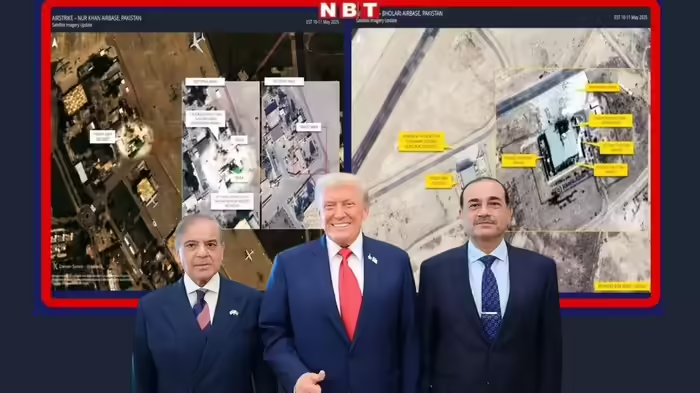
Washington: The veil of propaganda may last for a while, but the truth eventually comes to light. Newly released documents under the U.S. Foreign Agents Registration Act (FARA) have revealed that during Operation Sindoor in 2025, Pakistani diplomats and defense officials contacted their American counterparts over 100 times via emails and phone calls, pleading for intervention to prevent Indian strikes.
The filings, uploaded by U.S. law firm Squire Patton Boggs, provide a detailed log of Pakistan’s relentless lobbying efforts, including requests for in-person meetings with U.S. officials, intermediaries, and even the media. Notably, these interactions continued even after India announced a temporary ceasefire on 10 May 2025, when Pakistan sought Washington’s assistance to halt Operation Sindoor’s continuation.
Trump’s Mediation Claims Proven Hollow
Contrary to repeated claims by former President Donald Trump of his mediation role, the FARA documents make it clear that it was Pakistan—not India—that repeatedly sought U.S. intervention. The filings reveal that Pakistan offered incentives, including increased U.S. investments, special access, and critical minerals, to secure American support, a point Trump has publicly referenced multiple times.
The documents explicitly state:
“Pakistan requests an independent, impartial investigation into the Pahalgam attack of 22 April. Assistance from the United States will be welcomed. Pakistan seeks negotiations with India on all bilateral issues, including the Indus Waters Treaty and counterterrorism measures. Strong regional counterterrorism cooperation must include the United States. Pakistan believes a third party can help both nations reach credible agreements.”
The filings also highlight Pakistan’s own security concerns, noting threats from the Pakistani Taliban. According to the U.S. Director of National Intelligence’s 2025 Annual Threat Assessment, the Pakistani Taliban posed a potential risk to the United States, underscoring the complex security dynamics Pakistan faced domestically.
What Pakistan Offered the U.S. in Return
The FARA filings reveal that Pakistan offered multiple incentives to Washington to secure intervention against India. These included reviving bilateral relations based on shared interests, advancing a forward-looking agenda, and leveraging Pakistan’s large and youthful population to stimulate economic growth. Islamabad also discussed increased U.S. purchases of Pakistani goods, particularly in the energy and agriculture sectors.
In addition, Pakistan highlighted its counterterrorism cooperation, including the arrest and handover to the U.S. of the ISIS bomber responsible for killing 13 American soldiers in the Kabul Abbey Gate attack, as evidence of its capability and commitment.
The Fallout
The documents paint a stark picture: Pakistan, which publicly projected confidence against India, was internally alarmed by the intensity of Indian strikes. Its repeated appeals to Washington underscore the strategic pressure Islamabad faced, exposing the fragility behind its bold public rhetoric. The FARA filings decisively debunk Trump’s repeated claims of successful mediation, showing that Pakistan, not the U.S., drove efforts to halt the conflict.
Discover more from SD NEWS agency
Subscribe to get the latest posts sent to your email.