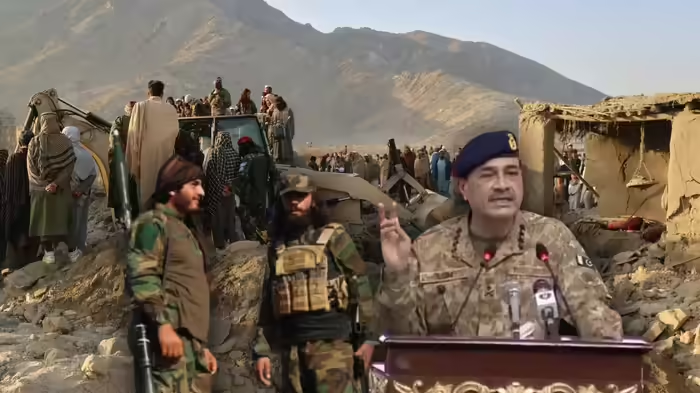
Kabul/Islamabad: Tensions between Pakistan and Afghanistan are escalating after Pakistan conducted early-morning airstrikes on Sunday targeting seven locations inside Afghanistan. The Pakistani government described the strikes as actions against Tehrik-i-Taliban Pakistan (TTP) and Islamic State militants, while the Afghan Taliban called them attacks on civilians and vowed retaliation. Experts warn that continued cross-border military actions increase the risk of full-scale armed conflict.
Details of the Strikes
Pakistan’s Information Minister Ataullah Tarar confirmed that the airstrikes targeted seven locations in Afghanistan in response to recent extremist attacks within Pakistan. A Pakistani security official claimed that over 80 militants were killed. Meanwhile, a Taliban spokesperson in Afghanistan reported that dozens of civilians, including women and children, were among the casualties.
Presidential Warning
Pakistani President Asif Ali Zardari stated that the strikes were conducted after repeated warnings about cross-border terrorism went unheeded. He criticized the Taliban regime in Afghanistan, claiming it has created conditions worse than those before 9/11. Zardari warned that anyone responsible for continued violence inside Pakistan would not be beyond accountability.
Likely Continuation of Airstrikes
Independent security researcher Abdul Saeed told Arab News that Pakistan is likely to continue airstrikes, prioritizing military force over negotiations. Islamabad blames Afghanistan’s Taliban government for failing to act against TTP militants, a charge the Taliban rejects, calling the issue Pakistan’s internal problem.
Risks of Backlash
Former Pakistani special envoy Asif Durrani noted that the current Afghan Taliban government is not serious about controlling the TTP. While the airstrikes send a message that cross-border safe havens will no longer be tolerated, analysts warn that such actions could inflame anti-Pakistan sentiment within Afghanistan. Kabul-based analyst Tamim Bahis added that while Pakistan’s frustration with extremist violence is understandable, continued airstrikes may make political and military action against pro-Pakistan groups inside Afghanistan more difficult.
Threat of Escalation
The region experienced a similar escalation last October, when Pakistani airstrikes along the Afghan border and in Kabul led to cross-border attacks by Afghan forces on Pakistani posts. The conflict lasted nearly a week, resulting in hundreds of casualties on both sides, and was eventually resolved through diplomatic mediation by Turkey and Qatar. Experts now fear that rising tensions could repeat a similar cycle of violence between Pakistan and Afghanistan.
Discover more from SD NEWS agency
Subscribe to get the latest posts sent to your email.