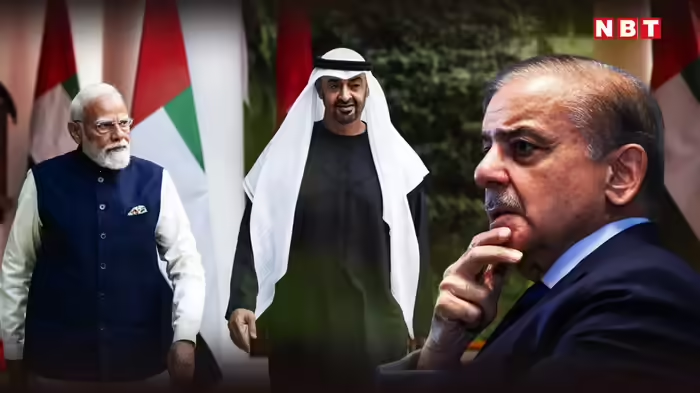
Islamabad/New Delhi: Pakistan is reportedly rattled after the three-hour visit of UAE President Sheikh Mohammed bin Zayed Al Nahyan (MBZ) to Delhi. During the visit, India and the UAE issued a joint statement criticizing “cross-border terrorism,” a move that Pakistan perceives as a strategic setback. The visit has sparked extensive discussion in Islamabad and among geopolitical analysts.
The Delhi visit comes at a time when UAE-Saudi relations have been strained. Saudi Arabia, which signed a defense agreement with Pakistan last September and is in talks to form an “Islamic NATO” including Turkey, now faces a new regional dynamic. Pakistan fears that the emerging India-UAE defense partnership could undermine its strategic plans in West Asia.
Immediately after MBZ’s meeting with Prime Minister Narendra Modi, Pakistan’s Foreign Minister Ishaq Dar reportedly called his Saudi counterpart Faisal bin Farhan. According to Pakistan’s Foreign Ministry, the call covered “recent developments and mutual interests.” Analysts suggest the call reflects Islamabad’s unease over India-UAE strategic alignment rather than routine diplomatic communication.
India-UAE Defense and Strategic Cooperation
During his Delhi visit, MBZ and PM Modi agreed to double bilateral trade to $200 billion by 2032 and signed agreements covering defense, space, energy security, advanced computing, and investment. The most notable aspect was a Letter of Intent on strategic defense partnership, signaling close cooperation in defense manufacturing, technology transfer, and capability development.
For India, this deal carries strategic significance. Pakistan has been attempting to expand its influence and arms sales in Arab countries. By deepening its defense partnership with the UAE, India can send a clear message to Saudi Arabia: it has viable alternatives beyond Pakistan.
Strategic Implications in West Asia
Experts note that India’s partnership with the UAE is fundamentally different from Pakistan-Saudi defense ties. Rather than focusing solely on arms procurement, the India-UAE agreement emphasizes joint manufacturing, technology development, and strategic depth. Defense and security cooperation have long been pillars of the India-UAE relationship, with regular consultations between military leaderships of both countries.
Geopolitical analyst Ali Mustafa described the visit as “a significant development that places Pakistan in a difficult position.” He noted that UAE controls key Pakistani infrastructure, including airports, ports, and telecommunications. Mustafa questioned whether Pakistan is ready to distance itself from its “lifeline” in the UAE and whether Saudi Arabia is willing to challenge India in this evolving regional landscape.
The visit underscores India’s growing strategic footprint in West Asia and highlights how emerging defense partnerships are reshaping regional dynamics, leaving Pakistan increasingly encircled.
Discover more from SD NEWS agency
Subscribe to get the latest posts sent to your email.