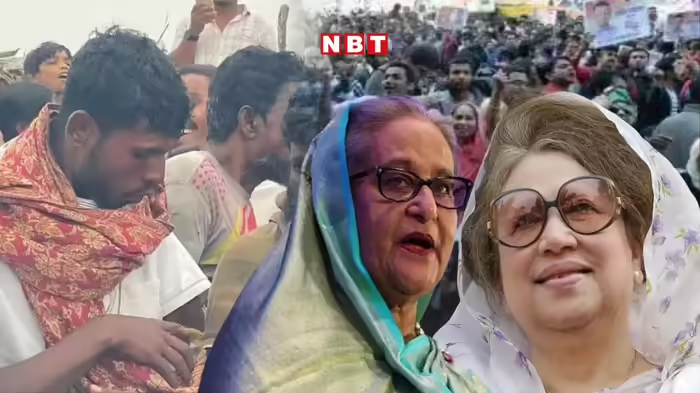
Dhaka: On August 5, 2024, Bangladesh witnessed the dramatic fall of Sheikh Hasina’s government, forcing the former Prime Minister to flee to India for her safety. While it was widely assumed that Khaleda Zia’s Bangladesh Nationalist Party (BNP) would fill the political vacuum, the reality on the ground suggests a very different trajectory.
Students and Islamic Alliance Reshape Bangladesh Politics
Following Hasina’s ouster, student leaders who had spearheaded the movement aimed to establish a Bangladesh under a stricter Islamic ideology. The National Citizen Party (NCP), formed in February 2025 with support from Muhammad Yunus, has allied with Jamaat-e-Islami’s political wing, Amar Bangladesh (AB) party, and the National Songwriters’ Movement to form a coalition named Gonotantrik Sangskar Jote. This coalition signals a potential shift toward a more hardline Islamic framework in Bangladesh.
NCP coordinator Nahid Islam described the alliance as the culmination of over two years of effort, framing the upcoming elections as a step toward “political transformation and economic liberation” with the aim of building a “New Bangladesh.” Notably, key student leaders, including Nahid Islam, were initially part of Yunus’ advisory board before taking on leadership roles in NCP.
Impact on Traditional Political Forces
The formation of these alliances indicates that not only Sheikh Hasina’s Awami League but also the BNP could face significant weakening. While the BNP appears to remain a major political entity under Khaleda Zia’s son Tarique Rahman, who manages the party from London, its influence is diminishing. The sudden shift in BNP’s stance toward Jamaat-e-Islami—blaming the party for the 1971 war-era atrocities under Pakistan’s direction—suggests recognition of Yunus’ growing influence in the political landscape.
Experts Warn of a Hardline Turn
Political analysts believe the decline of both Awami League and BNP signals a rising influence of hardline Islamic organizations. Sheikh Hasina’s long tenure (2009–2024) had been associated with economic development, electrification, exports, and infrastructure projects. However, the student-led movement of 2024 not only toppled her government but has created a power vacuum. Last month, Hasina was even sentenced to death, further diminishing her political relevance. Meanwhile, Khaleda Zia’s BNP lacks the strength to consolidate power, leaving Bangladesh at a critical crossroads.
With the traditional political centers weakened, analysts warn that the country could see a significant rise in the influence of hardline Islamic groups, reshaping Bangladesh’s political and ideological landscape in the coming elections.
Discover more from SD NEWS agency
Subscribe to get the latest posts sent to your email.