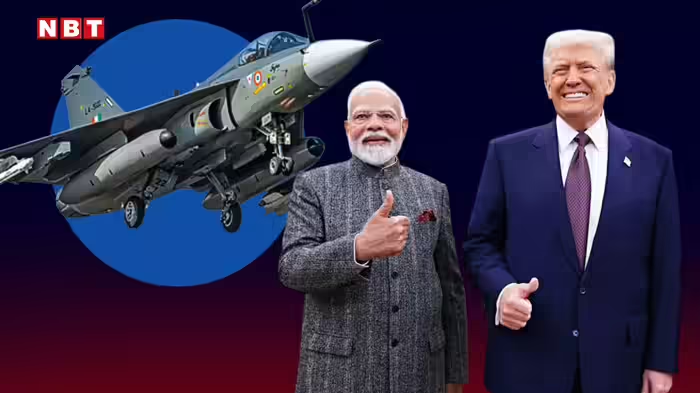
The recently announced India-US trade deal is expected to accelerate military technology projects in both countries. Improved bilateral relations will help India secure timely deliveries of fighter jet engines and facilitate technology transfers.
Washington: The India-US trade agreement has sparked widespread discussion, particularly regarding India’s continued oil imports from Russia and opening its market for American agricultural products. However, a crucial aspect of the deal also pertains to defense. The agreement could give a significant boost to India’s military sector, ensuring access to advanced US technology and fighter jet engines, thereby enhancing defense capabilities.
According to The Tribune, the announcement of the India-US trade deal is particularly welcome news for the military technology sector. Many Indian defense projects are closely tied to good relations with Washington. India requires engines from the US for its Tejas Mark 1A fighter jets, which are crucial for the country’s defense modernization plans.
Engine Supply Delays
Relations between the two nations had recently strained, causing delays in engine deliveries for the Tejas Mark 1A. These delays threatened to impact the technology transfer required for India’s next-generation Tejas Mark 2 fighter jets—projects critical to Hindustan Aeronautics Limited (HAL), which plans to produce 500 jets using American engines.
The India-US military technology collaboration is a key pillar of the agreement. In June 2023, the US had agreed to a joint venture for the production of General Electric’s F-414 aero engines and technology transfer. The Tejas Mark 2’s design and development are based on the specifications of the GE F-414 engine, and its first flight is scheduled for later this year.
Why Uncertainty Arose in India
Strained US-India relations previously created uncertainty for the Tejas program. HAL required approval from the Trump administration for technology transfer, which is expected to influence India-US defense cooperation for the next 4–5 decades. This underscores the strategic significance of the partnership.
Prior to the trade deal announcement, the US emphasized enhancing defense and military ties with India. While tensions during the Trump administration had affected defense collaboration, statements praising Prime Minister Narendra Modi and commitments to improve bilateral relations could now change the dynamics, potentially smoothing the path for critical military projects.