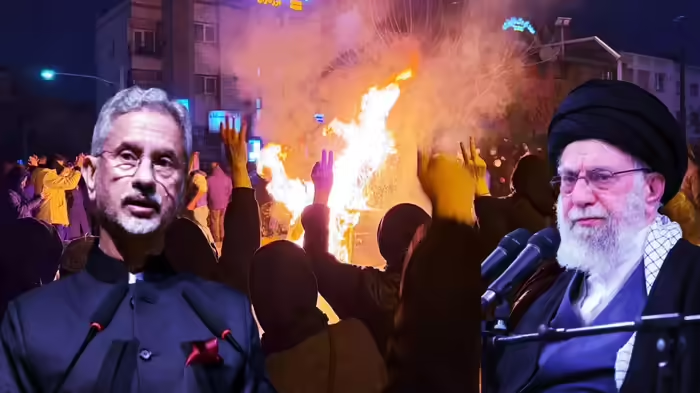
New York, January 24, 2026 – In a notable shift in its diplomatic approach, India voted against a Western-led resolution at the United Nations Human Rights Council (UNHRC) criticizing Iran for its handling of protests, even as the resolution was passed. China and Pakistan also opposed the measure.
The resolution, adopted on Friday, January 23, 2026, called for an expanded investigation into the Iranian authorities’ actions during nationwide protests, which reportedly resulted in thousands of deaths, including children. It demanded that Iran end its “cruel repression” of dissent. Of the 47 member states of the UNHRC, 25 voted in favor, seven opposed, and 15 abstained. Despite India, China, and Pakistan voting “no,” the resolution passed, granting independent investigators a broader mandate to gather evidence and hold Iran accountable for human rights violations.
India Maintains Support for Iran
India’s “no” vote extended to a proposal to extend the mandate of independent investigators monitoring human rights in Iran. Traditionally, India has maintained a neutral stance in such resolutions, often abstaining from voting. Observers see this as a significant departure from its past policy, signaling a stronger alignment with Iran. This approach follows India’s earlier position in November 2025 at the UN General Assembly, where it voted against a Third Committee resolution concerning human rights in the Islamic Republic of Iran.
Historical Context
Historically, India had voted against Iran at the International Atomic Energy Agency (IAEA) in 2005 and 2009, supporting the referral of Iran’s nuclear program to the UN Security Council under U.S. pressure following the India-U.S. nuclear deal. For nearly a decade afterward, India largely refrained from participating in votes criticizing Iran, opposing the politicization of human rights issues. However, since 2023, India’s position has shifted, increasingly siding with Iran against Western condemnation. Analysts attribute this change to a desire to reflect the perspectives of the Global South and to avoid regional diplomatic isolation, especially alongside China and Pakistan, who continue to support Tehran.
This development marks a significant recalibration in India’s UN diplomacy, highlighting its nuanced approach to balancing global human rights advocacy with strategic geopolitical and regional interests.