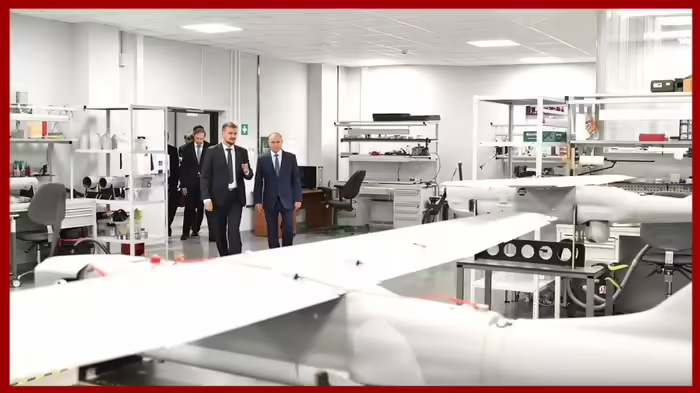
Moscow/New Delhi: Russia has repeatedly offered India its most advanced unmanned aerial vehicle (UAV), the Geran, which has wreaked havoc in Ukraine. Designed for long-range loitering strikes, the UAV has proven devastating against critical infrastructure, including ammunition depots and fuel storage, and has largely neutralized Western countermeasures. Despite Russia’s aggressive push, reports confirm that the Indian Army has declined the offer.
The Geran UAV: A Modern Weapon of War
The Geran is a Russian-modified version of Iran’s HESA Shahed-136 UAV, upgraded with delta-wing design, GPS-assisted inertial navigation, and salvo-launch capability. These enhancements make it a formidable weapon against high-value targets and energy infrastructure. Since its operational debut in 2021, the UAV has been central to Russian operations in Ukraine, demonstrating the lethal potential of long-range loitering munitions in modern warfare.
Russia has actively promoted the Geran to India, including offering a customized variant during President Vladimir Putin’s recent visit. Defense websites and experts repeatedly emphasized its battlefield utility, urging India to consider procurement.
Why India Said No
Sources from the Ministry of Defence (MoD) reveal that the Indian Army is pursuing a different doctrine for long-range, precision-strike UAVs. The focus is on modular warheads, high-endurance platforms, precise navigation suites, and resilient electronic counter-countermeasure frameworks. During Operation Sindhur, India successfully deployed both domestic and foreign loitering munitions against Pakistan, demonstrating exceptional terminal-stage accuracy and robust datalink stability.
Indian officials stress that the country is developing an indigenous UAV industry capable of meeting operational needs, emphasizing defense sovereignty over reliance on foreign systems. While Russia tailored its offer to India’s requirements, MoD authorities confirmed that the Indian Army has no intention of purchasing the Geran UAV.
A Clear Message
By rejecting the Russian offer, India signals a strategic pivot towards strengthening domestic research and development and achieving long-term technological independence in critical defense sectors. The move underscores India’s commitment to self-reliance and minimizing dependency on foreign defense platforms, particularly in areas where local capabilities are rapidly advancing.
Discover more from SD NEWS agency
Subscribe to get the latest posts sent to your email.