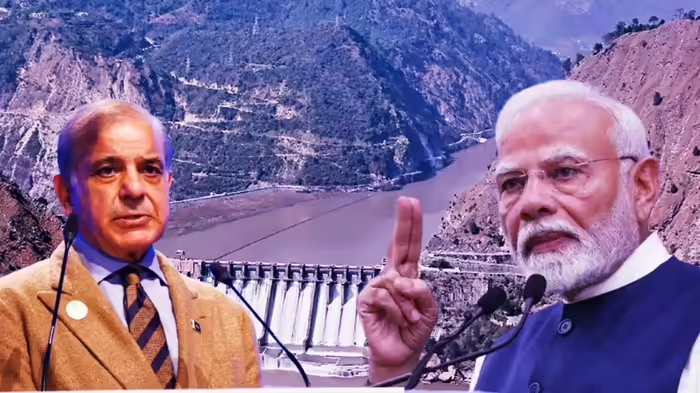
The long-standing Indus Waters Treaty (IWT) dispute between India and Pakistan has once again intensified, with India taking a firm stance by refusing to comply with the summons issued by the arbitration tribunal.
India’s Position
Islamabad: India has firmly rejected the intervention of the Permanent Court of Arbitration (PCA) in The Hague regarding the Indus Waters Treaty. New Delhi has stated that it considers the tribunal to be unlawful and will not adhere to its supplementary awards or respond to requests for operational data.
Last week, the Hague-based court had issued a summons requesting India to share sensitive operational records and data related to the Kishanganga and Ratle hydroelectric projects in Kashmir. India refused, asserting that the tribunal’s authority is not recognized.
A senior government official told CNN-News18 that India will not comply with any treaty obligations, including sharing hydrological data or participating in arbitration, until its fundamental security concerns are addressed and Pakistan ceases support for cross-border terrorism.
The Indian Ministry of External Affairs formally communicated to the tribunal that India will neither follow its orders nor participate in its proceedings, emphasizing that the formation of a parallel arbitration court violates the dispute resolution framework of the IWT.
Pakistan Appeals Internationally
Pakistan has raised the matter at the United Nations, urging global intervention. Islamabad has termed India’s refusal as an “act of war” and highlighted the potential threat of a water crisis arising from India’s suspension of treaty obligations.
The IWT, signed in 1960, regulates the allocation of water from the six rivers of the Indus Basin between India and Pakistan. India had earlier announced in April last year, following the Pahalgam terrorist attack, that it would suspend treaty operations, further escalating tensions with Pakistan.
India’s firm stance signals a new phase in the IWT dispute, leaving Pakistan in a challenging position both diplomatically and regionally.
Discover more from SD NEWS agency
Subscribe to get the latest posts sent to your email.