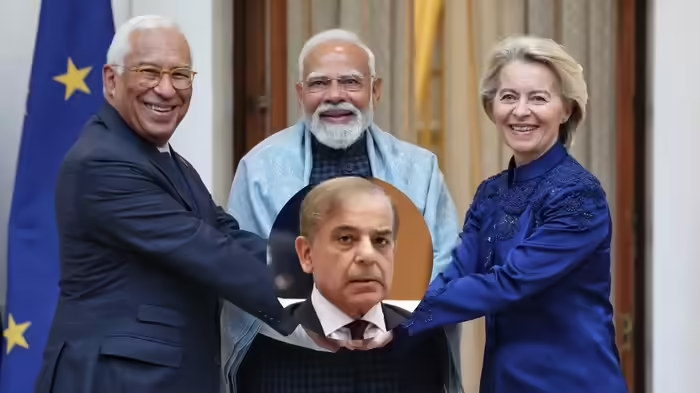
India’s recent Free Trade Agreement (FTA) with the European Union (EU) has caused unease in neighboring Pakistan and raised concerns in Bangladesh. Dubbed the “mother of all trade deals,” the agreement promises to reshape regional trade dynamics, particularly impacting countries that previously relied on preferential access to European markets.
According to Pakistani media reports, former Federal Commerce Minister Gohar Ejaz has warned that the deal could threaten the livelihoods of over 10 million people in Pakistan, particularly in the textile sector, which forms the backbone of the country’s exports. Pakistan’s textile industry currently contributes approximately $9 billion annually in export revenue, and the FTA could erode its competitive advantage.
Pakistan’s Concerns
Ejaz highlighted that Pakistan previously benefited from preferential trade access to the EU. However, under the new arrangement, zero-tariff access will be extended to all regional partners, effectively ending Pakistan’s historical advantage and intensifying competition. Combined with rising production costs, energy shortages, and higher taxes, Pakistan’s industrial sector could face severe challenges, potentially leading to factory closures and widespread job losses.
Bangladesh is also expected to face pressure from the deal, as regional competition in sectors such as textiles, garments, and footwear intensifies.
India-EU Free Trade Agreement
The India-EU FTA, concluded on Tuesday, offers Indian industries significant opportunities. Sectors with high labor intensity—such as leather and footwear, gems and jewelry, and textiles—will now enjoy zero-duty access to all 27 EU member countries. Analysts expect this to boost India’s export competitiveness, improve market access, and strengthen its presence in key European markets.
While the deal is celebrated in India and across the EU, it has triggered apprehension in neighboring countries whose economies depend heavily on textile exports. Pakistan and Bangladesh will need to recalibrate their trade and industrial strategies to mitigate the potential impact of India’s growing foothold in European markets.
In essence, the India-EU FTA strengthens India’s trade position while intensifying competitive pressures on regional economies, particularly Pakistan and Bangladesh.
Discover more from SD NEWS agency
Subscribe to get the latest posts sent to your email.