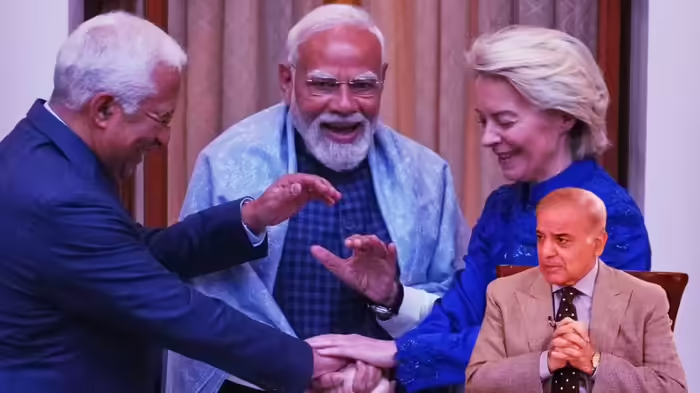
Islamabad: Pakistan is raising alarms over the India-European Union (EU) Free Trade Agreement (FTA), which was signed in New Delhi on 27 January 2026. The landmark deal, dubbed the “Mother of All Deals,” is expected to create a unified market for over 2 billion people, but Pakistan fears major economic repercussions, particularly in its textile sector.
Gauhar Ejaz, former Commerce Minister and prominent industrialist, has warned the Pakistani government that the FTA could put more than 10 million jobs at risk. Speaking to ARY News, Ejaz said:
“The India-EU deal poses a serious threat to Pakistan’s industrial sector, especially the $9 billion textile industry. The challenges created by this new trade agreement will make it extremely difficult for our market to compete.”
Loss of Trade Benefits
Ejaz highlighted that Pakistan’s preferential zero-tariff access to the EU, granted under earlier trade arrangements, could now be effectively nullified. This would reduce the competitiveness of Pakistani exports compared to Indian goods entering Europe duty-free under the new agreement.
He urged the Shahbaz Sharif government to take urgent measures to protect domestic industries, including supplying electricity and gas at competitive regional rates and aligning taxes and overall business costs with neighboring countries. Without such interventions, Ejaz warned, Pakistan’s industrial sector may struggle to survive in the increasingly competitive global market.
A Landmark Deal
The India-EU FTA marks the culmination of nearly 20 years of negotiations. Once implemented, it is expected to streamline trade between India and the 27 EU member states, benefiting over 2 billion people globally. While India and Europe see the agreement as a major economic opportunity, several countries—including the United States, Turkey, and Pakistan—have expressed concerns about its potential impact on their own industries and labor markets.
The deal underscores the shifting dynamics of global trade, with India poised to strengthen its position in the European market while Pakistan faces growing competitive pressures.
Discover more from SD NEWS agency
Subscribe to get the latest posts sent to your email.