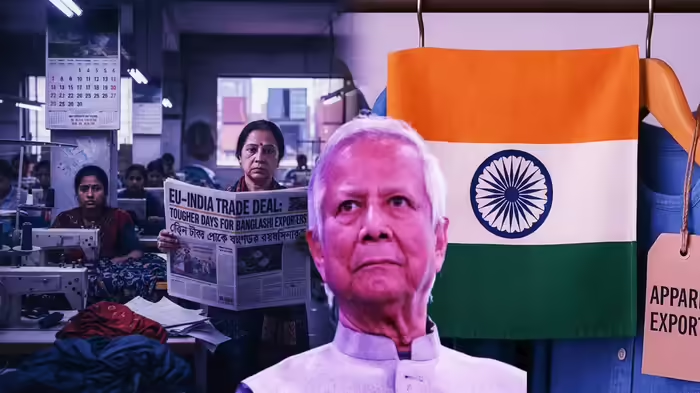
Dhaka: Bangladesh’s garment exporters are raising alarms over the potential impact of the India-European Union (EU) Free Trade Agreement, signed on 27 January 2026. Industry experts warn that the deal, set to take effect in 2027 after parliamentary approvals in India and the EU, could undermine Bangladesh’s long-held advantage in the European market.
Currently, Bangladesh enjoys duty-free access to the EU under the Least Developed Country (LDC) framework, a benefit it has had since 1975. This has made Bangladesh the second-largest exporter of textiles to the EU after China. In certain segments such as denim, trousers, and T-shirts, it has even surpassed China. In FY 2024-25, Bangladesh accounted for over 50% of EU garment imports, totaling $19.71 billion.
Impact of the India-EU Deal
Once the India-EU free trade agreement comes into force, Indian garments will enjoy duty-free access to European markets, eliminating the 12% tariffs that currently apply. Experts fear this will erode Bangladesh’s competitiveness. Mustafa Rahman, Senior Fellow at Bangladesh’s Centre for Policy Dialogue (CPD), told The Daily Star:
“The impact will be significant, particularly for garments. Once India gains duty-free access, Bangladesh will face stiffer competition in the EU market.”
Bangladesh faces a “double challenge” as it is set to graduate from LDC status later this year, ending its automatic duty-free access. Without a new trade deal, such as a bilateral FTA or GSP Plus status, Bangladesh could face tariffs of 12.5% from 2029 onwards. Meanwhile, India and other countries with free trade agreements, like Vietnam, will continue to enjoy duty-free access, potentially affecting more than half of Bangladesh’s garment exports.
Industry Concerns
BRAC EPL, a Bangladeshi brokerage firm, noted in a research report:
“Rising competition has tightened negotiation terms, which could structurally impact Bangladesh’s export margins.”
Faisal Samad, Director at the Bangladesh Garment Manufacturers and Exporters Association, said:
“The immediate impact may not be felt, but gradually the competitive pressure from India will increase. India benefits from raw cotton availability, labor, and supportive government policies.”
Fazlul Haque, Managing Director of Knitwear Factory Plummy Fashions in Narayanganj, expressed deep concern:
“This could weaken Bangladesh’s price competitiveness. If Bangladesh faces duties while competitors enjoy duty-free access, buyers will be strongly incentivized to shift orders elsewhere.”
Shaukat Aziz Russell, President of the Bangladesh Textile Mills Association, emphasized that tax relief and incentives are crucial to maintaining Bangladesh’s competitiveness. Meanwhile, Mohammad Hatem, President of the Bangladesh Knitwear Manufacturers and Exporters Association, criticized the government for failing to secure sustainable EU trade advantages, such as an FTA or GSP Plus access, calling it a long-standing policy failure.
The India-EU trade deal marks a significant shift in regional textile dynamics, and Bangladesh’s garment sector may need urgent policy and strategic adjustments to maintain its position in Europe.