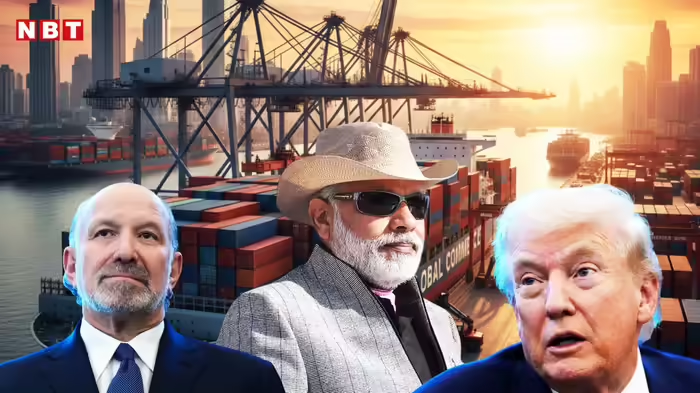
Washington/New Delhi: In a move that surprised global observers, U.S. President Donald Trump announced a major trade breakthrough with India, slashing tariffs on Indian goods from 50 percent to 18 percent and signaling a sudden thaw in relations that only weeks ago appeared strained.
The agreement, revealed through a series of social media posts by Trump, came just days after Washington had warned New Delhi over its continued purchase of Russian oil and threatened punitive tariffs as high as 500 percent. The abrupt shift has raised a central question in diplomatic circles: what changed so quickly?
A Sudden Turn in a Tense Relationship
Until late January, U.S.–India ties were caught in a familiar standoff. Washington argued that India’s purchases of discounted Russian oil were weakening Western pressure on Moscow, while New Delhi resisted what it saw as lectures and economic coercion. Trade negotiations appeared stalled.
Then, on February 2, the tone changed dramatically.
Trump announced that tariffs on Indian goods would be reduced to 18 percent and that an additional 25 percent levy linked to Russian oil purchases would be removed. In a post on Truth Social, he described the agreement as a “huge victory” for American workers and global security, claiming India had agreed to stop buying Russian oil.
Indian Prime Minister Narendra Modi confirmed the tariff reduction in a separate message, thanking Trump on behalf of India’s 1.4 billion people. Notably, Modi’s statement made no reference to Russian oil, highlighting a subtle difference in messaging between the two governments.
The Ambassador’s Quiet Diplomacy
Diplomatic insiders point to intense behind-the-scenes negotiations. Newly appointed U.S. Ambassador to India Sergio Gor is widely credited with playing a crucial role in reviving talks. Just before the announcement, Gor posted a cryptic message hinting that Trump had spoken with Modi, urging observers to “stay tuned.”
Analysts have described the process as an example of “duck diplomacy” — calm on the surface, frantic effort underneath — a term used by strategic affairs expert Robinder Sachdev. The agreement was choreographed at the highest political levels, suggesting both sides were eager to stabilize the relationship.
The EU Factor and Strategic Competition
Another factor may have been India’s accelerating economic engagement with the European Union. Diplomats say Washington feared being left behind after the EU finalized a significant trade understanding with New Delhi. Modi had publicly praised the India–EU partnership as opening new avenues for growth and strategic cooperation.
For the United States, the deal is also tied to energy politics and geopolitics. The White House has indicated that reducing Russia’s oil revenue remains a strategic priority. U.S. Treasury officials recently suggested India had already begun cutting Russian oil imports, while Washington has floated alternative energy arrangements, including increased Venezuelan supply.
Energy Chess and Global Risk
According to international analysts, the trade deal reflects a broader geopolitical balancing act. By redirecting India’s energy sourcing while keeping global oil prices stable, Washington is attempting to pressure Moscow without destabilizing markets. At the same time, tensions involving Iran and the wider Gulf region add urgency to energy diplomacy.
The United States wants India firmly anchored as a manufacturing and defense partner in Asia amid competition with China. India, in turn, seeks proof that closer alignment with Washington brings tangible and immediate economic benefits.
A Reset — or a Pause?
Trump has publicly praised Modi and India in unusually warm terms since the announcement, fueling talk of a strategic reset. Yet observers caution that structural tensions remain, including disagreements over regional security narratives and trade protectionism.
Ambassador Gor’s active engagement suggests both capitals are committed to strengthening ties. Whether the current momentum translates into a durable reset — or simply a tactical truce — will depend on how the two countries manage energy policy, security interests, and economic competition in the months ahead.
For now, the surprise trade deal marks one of the fastest reversals in recent U.S.–India diplomacy, signaling that even strained partnerships can shift rapidly when strategic interests align.
Discover more from SD NEWS agency
Subscribe to get the latest posts sent to your email.