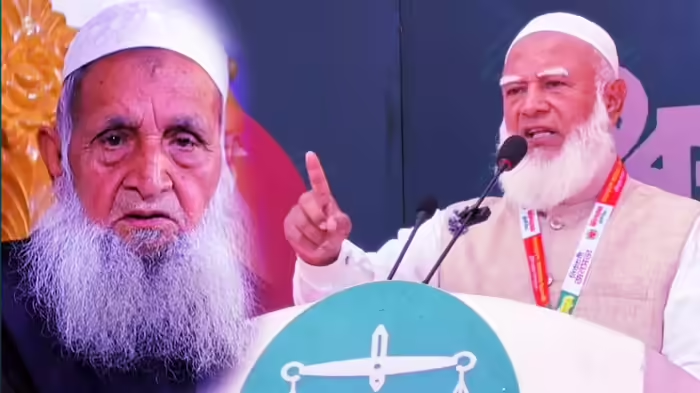
Dhaka: With Bangladesh’s national elections scheduled for February 12, 2026, rising concerns over the influence of the hardline Jamaat-e-Islami party have prompted the country’s prominent Islamic organization, Hefazat-e-Islam, to take a strong stance.
Jamaat-e-Islami Declared “Haram”
Hefazat-e-Islam leader Allama Shah Muhibbullah Babunagari has issued a warning to Bangladeshi Muslims, declaring that voting for Jamaat-e-Islami is haram (forbidden). Speaking at an election rally in Chattogram on February 5, Babunagari framed the upcoming vote not merely as an election but as a jihad against Jamaat-e-Islami, urging the community to unite to prevent the party’s rise.
Babunagari accused Jamaat-e-Islami of misinterpreting Islam and warned that if the party came to power, it would harm Islam and the Muslim community in Bangladesh. “They aim to uproot the foundations of Islam and the core values of our people,” he said, labeling Jamaat as a group with violent tendencies.
Criticism of Jamaat-e-Islami
Babunagari has been openly critical of Jamaat for years. Last August, he described the party as hypocritical, stating: “Jamaat-e-Islami follows Maududi’s interpretation of Islam, whereas we uphold the Islam of Madinah.” He reiterated that Jamaat poses a direct threat to the integrity of Islam in Bangladesh.
Electoral Context and BNP Alliance
Recent surveys indicate that Jamaat-e-Islami could emerge stronger than before, potentially challenging the lead of Tarique Rahman’s Bangladesh Nationalist Party (BNP). Local media reports suggest that during the election campaign, BNP has sought to strengthen ties with Hefazat-e-Islam, possibly to consolidate support against Jamaat.
With the elections just days away, Hefazat-e-Islam’s intervention is seen as a significant factor in shaping voter behavior, particularly among devout Muslim communities, and adds a new layer of complexity to Bangladesh’s highly contested political landscape.
Discover more from SD NEWS agency
Subscribe to get the latest posts sent to your email.