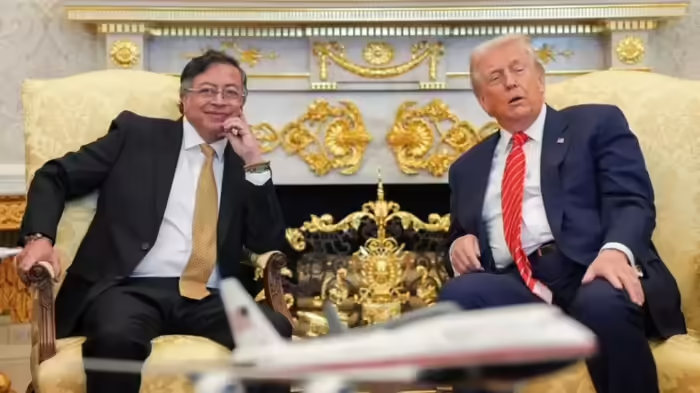
Bogotá: Colombian President Gustavo Petro visited the United States in early February and met with former U.S. President Donald Trump—a meeting closely watched worldwide. The encounter came just a month after Trump had threatened military action against Colombia and had revoked Petro’s visa, highlighting the tense backdrop of their discussions.
On February 3, Petro met Trump at the White House. The meeting followed U.S. military actions in Venezuela and the alleged kidnapping of President Nicolás Maduro, events that Petro publicly criticized. The 65-year-old leftist leader is known for his outspoken opposition to Trump’s policies. He has strongly condemned potential U.S. military interventions in Venezuela and has been a vocal critic of Israel’s actions in Gaza—stances that have often put him at odds with the U.S. administration.
Historical Ties Between the U.S. and Colombia
U.S.-Colombia relations have not always been strained. After Colombia gained independence from Spain in 1819, the U.S. recognized its sovereignty in 1822 and established a diplomatic mission in 1823. The two nations signed several treaties on peace, navigation, and trade, and have cooperated in security and economic matters ever since, although Cold War geopolitics and anti-drug campaigns have occasionally created friction.
Petro: A Vocal Critic of U.S. Policies
Elected in 2022 as Colombia’s first leftist president, Petro quickly emerged as a prominent critic of Trump’s Latin American policies. In January 2025, after Trump’s return to the White House, tensions escalated. U.S. attacks on Venezuelan ships, allegedly transporting drugs, drew sharp condemnation from Petro, who called such actions “acts of tyranny.”
At the United Nations General Assembly in September 2025, Petro called for criminal investigations against U.S. officials involved in these operations, including Trump, and criticized Israel’s military actions in Gaza. His remarks led to the U.S. revoking his visa. Trump also imposed sanctions on Petro, even though he was set to leave office after Colombia’s May elections.
Military Threats and Diplomatic Resolve
Trump had publicly accused Colombia of failing to curb drug production, threatening to withhold aid and even suggesting potential military measures. Petro, in response, vowed to defend his nation, asserting he would take up arms if necessary. Yet, in interviews, he emphasized his government’s willingness to cooperate with the U.S. on anti-narcotics efforts.
From Guerrilla Fighter to President
Born on April 19, 1960, in the Caribbean coastal city of Siñaga de Oro, Petro grew up in Bogotá and later in Zipaquirá. At 17, he joined the guerrilla group M-19, which later transformed into a political party, allowing him to enter Colombian politics. Arrested in 1985 due to his M-19 association, Petro was later released and elected to the House of Representatives in 1991.
Petro continued to rise politically, winning record votes in the 2006 parliamentary elections and serving as a senator. After resigning to contest the 2010 presidential elections, he was elected Mayor of Bogotá in 2011, serving until 2015. Despite losing the 2018 presidential race, he defeated Rodolfo Hernández Suárez in the 2022 runoff to become Colombia’s 35th president.
Gustavo Petro’s journey from a teenage guerrilla fighter to the presidency reflects a story of resilience and determination, and his firm stance on national and international issues has already made a significant mark on global diplomacy.
Discover more from SD NEWS agency
Subscribe to get the latest posts sent to your email.