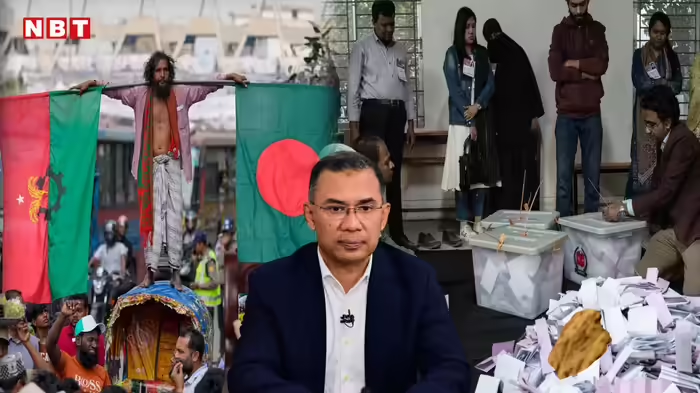
Dhaka, February 13, 2026: Tarique Rahman, chairman of the Bangladesh Nationalist Party (BNP), is all set to become Bangladesh’s next Prime Minister following a decisive victory in the national elections. Winning both Dhaka-17 and Bogra-6 constituencies, Rahman secured 72,699 votes in Dhaka-17, narrowly defeating his closest rival Dr. Khaliduzzaman of Jamaat-e-Islami, who received 68,300 votes.
From Exile to Leadership
The 60-year-old Rahman returned to Bangladesh from London on December 25, 2025, after 17 years in exile. During the tenure of former Prime Minister Sheikh Hasina, he had been convicted in absentia for involvement in terrorism charges following a bomb attack in Dhaka and sentenced to life imprisonment. After Hasina’s government fell during the 2024 student-led revolt, the caretaker government under Mohammad Yunus acquitted Rahman of all charges, clearing the path for his return to active politics.
Rahman’s controversial past includes being labeled the “Dark Prince” in a 2005 U.S. diplomatic cable, later released by WikiLeaks, for allegedly running a “parallel government” and orchestrating violent political activities during BNP’s previous tenure. During the 2004 grenade attack on an Awami League rally that injured Sheikh Hasina and killed 24 people, Rahman had been convicted in absentia and sentenced to life imprisonment before his acquittal.
Promises and Policy Agenda
Rahman has laid out a comprehensive agenda for governance:
Domestic Reforms:
- Limit of two terms (10 years) for Prime Ministers
- Creation of a Vice President position
- Constitutional amendments for a “government of the people”
- Zero tolerance for corruption
- End of “politics of revenge”
Economic & Social Initiatives:
- Waiver of interest on farmers’ loans
- Creation of 2 million new jobs for youth
- Economic diversification beyond the garment industry
- Free education for women
- Zero tolerance for violence against minorities and women
Foreign Policy Priorities:
- Reset relations with India based on equality and mutual respect
- Maintain balanced relations with China and India
- Revive SAARC and pursue ASEAN membership
- Continue engagement with Pakistan
The Shadow of “Hawa Bhaban”
Rahman’s rise raises questions about the extent of his independence from his political legacy. Critics recall the infamous “Hawa Bhaban”, a two-story office building that operated as a shadow PMO during his mother Khaleda Zia’s tenure, from where Rahman allegedly exerted enormous influence. Observers wonder whether he will truly govern transparently or replicate the “Dark Prince” model of running government from behind the scenes.
Resetting Foreign Policy
Rahman’s “Bangladesh First” approach signals a potential departure from Hasina-era diplomacy. While promising cooperation with India on counter-terrorism, water-sharing, and protection of minorities, Rahman envisions Bangladesh as a more independent, assertive neighbor—particularly in dealings with China and Pakistan.
- China: Bangladesh owes Beijing $6 billion under the Belt and Road Initiative. Rahman is expected to continue infrastructure and defense projects without cancellations.
- Pakistan: Rahman is likely to maintain the diplomatic engagement initiated by the Yunus caretaker government in 2025, while balancing concerns from India. Islamabad may see this as an opportunity to regain diplomatic leverage in Dhaka.
Analysts’ Take
Political analysts caution that while Rahman promises reform and transparency, his long-standing family legacy, past controversies, and the influence of old associates could shape the contours of his governance. Whether the BNP under Rahman can establish a fully constitutional, accountable government—or revert to shadow governance from Hawa Bhaban—remains a key question for Bangladesh’s future.