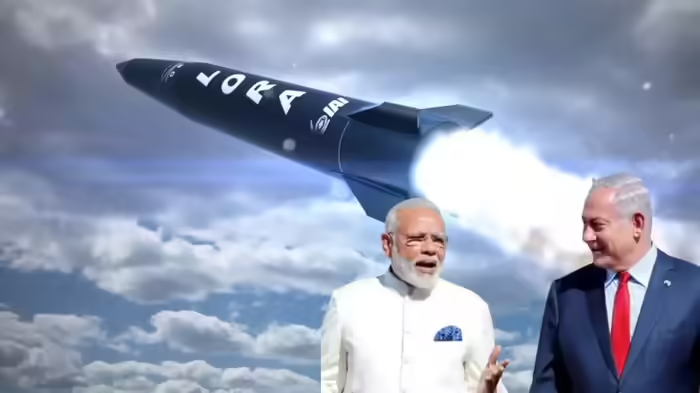
Tel Aviv: Prime Minister Narendra Modi is set to visit Israel this week, a trip expected to strengthen defense and technology ties between the two nations. During the visit, India and Israel may finalize multi-billion-dollar defense deals, spanning missile systems, “killer” drones, and advanced air defense platforms. Analysts say these agreements could reshape India’s defense strategy over the next decade.
Strategic Significance of Modi’s Visit
According to Israeli defense expert Dr. Lauren Dagan Amos, India’s 2027 defense budget underscores a renewed focus on AI, autonomy, and self-reliance. India has announced a defense allocation of $93.5 billion, with plans linked to post-Operation Sindur strategies. This budget signals to Israel and other Western partners that India aims to move beyond being a mere weapons importer toward becoming a security provider in the region.
Dr. Dagan Amos notes that India-Israel collaboration now emphasizes industrial partnership rather than the traditional supplier-customer model. Prime Minister Modi seeks to leverage Israeli expertise in AI, network-centric warfare, and autonomous surveillance systems to ensure operational uniformity across all branches of the Indian military.
Lessons from Operation Sindur
Operation Sindur showcased India’s precision strike capabilities, integrating advanced intelligence, armed drones, and AI-enabled surveillance. During the operation, India’s counter-drone systems neutralized hundreds of Pakistani drones, demonstrating the effectiveness of digital warfare. The upcoming defense deals may include Israeli technology transfers that enhance India’s AI-driven capabilities across land, air, and naval domains.
Historically, Israel also assisted India during the Kargil War, supplying laser-guided munitions used by Mirage fighter jets to destroy Pakistani positions, forcing a tactical withdrawal. This collaboration illustrates the continuity of strategic partnership in high-stakes scenarios.
Tackling Common Defense Challenges
Both nations face similar pressures regarding personnel costs. Approximately half of India’s defense budget is spent on salaries and pensions. By investing in AI and automation, India hopes to maintain robust security with fewer personnel. Dr. Amos emphasizes that this aligns with Israel’s “Small and Smart” doctrine, optimizing surveillance, logistics, and border management through technology.
Forward Outlook
India’s engagement with Israel marks a significant shift from procurement-focused cooperation to strategic partnership. With AI-enabled systems, autonomous drones, and advanced defense platforms, India is poised to enhance its operational reach, strengthen deterrence, and maintain technological superiority in the region.
The Modi visit is therefore not just a diplomatic engagement but a step toward a digitally empowered, strategically independent Indian military.
Discover more from SD NEWS agency
Subscribe to get the latest posts sent to your email.