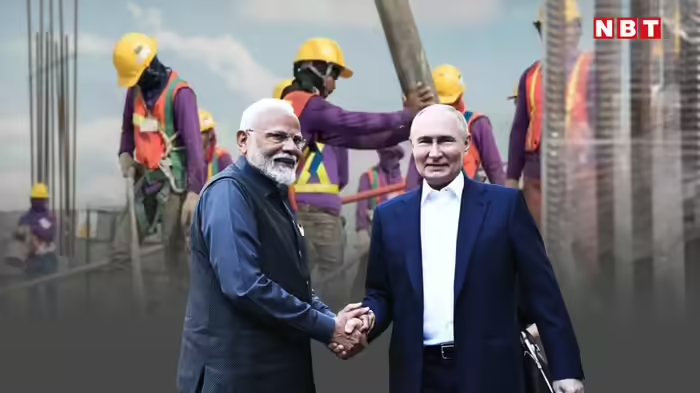
Moscow: Russia is grappling with a severe shortage of working-age population and skilled labor, a problem that has only intensified due to the ongoing Ukraine conflict. To address this, Russian President Vladimir Putin recently visited India, meeting Prime Minister Narendra Modi and signing several agreements, including a deal to bring a large number of Indian workers to Russia. Around one million Indian workers are expected to move to Russia over the next few years, providing the Kremlin with much-needed manpower and offering Indian youth employment with attractive salaries.
However, experts warn that even with this influx, Russia’s labor challenges will not be fully resolved, and Indian workers may face serious risks and uncertainties.
Russia’s Labor Shortage and the Ukraine War
Dubai-based expert Sahil Menon, writing in the Moscow Times, notes that Putin’s recent India visit focused heavily on labor issues, beyond traditional defense and strategic cooperation. The war in Ukraine has worsened Russia’s manpower shortage, with many young citizens either joining the military or leaving the country. As a result, attracting foreign workers, especially from India, has become a strategic necessity for Moscow.
Russia is projected to require millions of additional workers by 2030 to sustain its economy, and one-third of its foreign labor slots—approximately 71,817 positions—have been reserved for Indian citizens. Still, analysts believe this will only partially address the shortage.
Opportunities and Risks for Indian Workers
India views the deployment of its youth abroad as a way to provide employment opportunities and generate foreign remittances, particularly in countries facing workforce deficits. However, the move comes with challenges:
- Fraud and exploitation: Reports indicate that some Indian job seekers and medical students have been misled by fraudulent recruitment agencies and coerced into military service in Russia.
- Economic uncertainty: Russia’s strict regulations and international sanctions raise doubts about the long-term financial viability of employment there. Countries like Georgia and Armenia have even issued warnings to their citizens about traveling to Russia.
- Money transfer issues: Indian workers must navigate difficulties in sending earnings back home due to Russia’s limited access to international banking channels. While VTB Bank, Russia’s largest lender with operations in India, is facilitating transactions, the process remains complex and risky.
Strategic and Diplomatic Implications
If India sends up to two million workers to Russia in the coming years, New Delhi could become economically and politically tied to Moscow. While this labor cooperation addresses Russia’s immediate manpower shortage, it also exposes India to geopolitical and financial risks. Experts argue that the deal, though beneficial on paper, will neither fully resolve Russia’s challenges nor guarantee straightforward gains for Indian workers.
In short, the initiative offers high salaries and employment opportunities but comes with uncertainties, risks, and a complex geopolitical backdrop. Both Russia and India will need careful planning to ensure the arrangement benefits their populations without creating new vulnerabilities.
Discover more from SD NEWS agency
Subscribe to get the latest posts sent to your email.