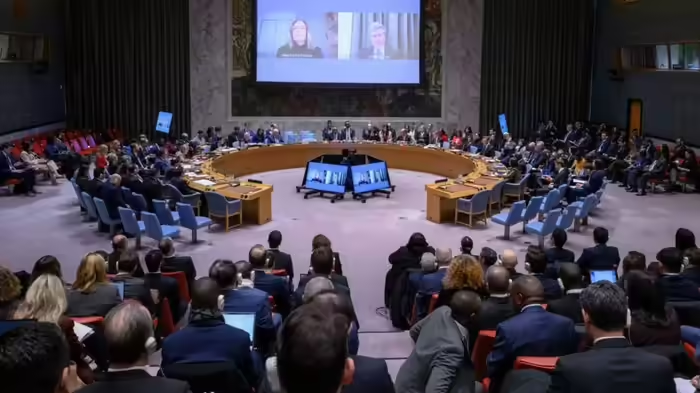
New York: On Monday, an emergency meeting of the United Nations Security Council (UNSC) was convened to discuss the ongoing crisis in Venezuela, following U.S. military actions and the detention of President Nicolás Maduro. The UNSC members appeared divided over the issue, with several countries expressing concerns over the situation.
UN Chief Antonio Guterres raised alarms over the developments, emphasizing the need to respect the UN Charter in the face of U.S. military intervention. He further urged that international law should be upheld in the case of Maduro’s arrest. Russia, Cuba, and several other nations strongly criticized the U.S. actions, while Argentina and other American allies stood by the U.S. stance.
U.S. Military Action Sparks Global Debate
Antonio Guterres, the UN Secretary-General, expressed serious concerns over the U.S. military operation, calling it a violation of international law. He questioned the precedent this action could set for global diplomatic relations. During the meeting, Russia’s representative condemned the U.S. actions and demanded the immediate release of both Nicolás Maduro and his wife Cilia Flores, who were detained in New York.
The Venezuelan government, in its address to the UNSC, claimed that the U.S. military intervention was driven by a desire to seize the country’s vast natural resources, particularly its oil reserves.
Countries such as Mexico, Cuba, and Chile joined Russia in condemning the U.S. actions, with Chile describing the assault as setting a “dangerous precedent.” The attack was seen by many as a direct challenge to Venezuela’s sovereignty and international law.
U.S. Allies Defend the Intervention
On the other hand, U.S. allies such as Argentina, the United Kingdom, and Latvia defended the military action, calling it necessary due to Maduro’s alleged involvement in drug trafficking. The U.S. military reportedly detained President Maduro and his wife Cilia Flores early on Saturday, bringing them to New York to face charges. Maduro, who has been accused of drug trafficking, has denied all charges, calling them politically motivated.
This diplomatic divide reflects the broader geopolitical tension over Venezuela’s economic and political crisis, with the U.S. accusing Maduro of running a narco-state, while many Latin American countries and others accuse the U.S. of acting outside international law to gain control over Venezuela’s resources.
The Way Forward
As discussions continue at the UNSC, the international community remains deeply divided on the best course of action. The situation in Venezuela is not only about the fate of Maduro but also about broader concerns regarding U.S. interventions and the role of the United Nations in handling such crises. How the UN responds to this crisis will likely set a precedent for future interventions in sovereign nations by major powers.
Discover more from SD NEWS agency
Subscribe to get the latest posts sent to your email.