
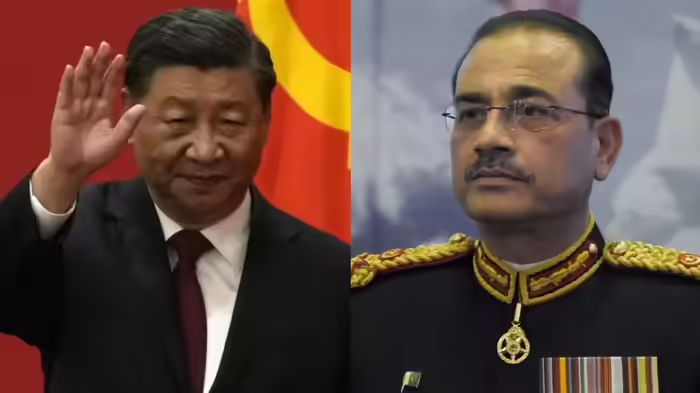
Beijing: Pakistan and China have maintained a close strategic partnership for years, particularly in the defense sector, with the apparent objective of countering India. Recent developments indicate that this cooperation has entered a new, more assertive phase.
In recent months, Pakistan has brokered deals to sell JF-17 fighter jets to multiple countries, leveraging China’s co-development of the aircraft to strengthen ties with Muslim-majority nations. Domestically, Pakistan’s military has consolidated power, allowing it to make major decisions without political upheaval—a pattern that historically enables Pakistan to maintain internal military strength while benefiting from external support, notably from China.
The JF-17 as a Strategic Tool
Under the leadership of Army Chief Asim Munir, Pakistan has been exporting the JF-17 jets to countries like Libya, Sudan, Saudi Arabia, Azerbaijan, Nigeria, and Bangladesh, either through completed sales or ongoing negotiations. The aircraft has become central to Pakistan’s defense power projection and serves as a vehicle for China to showcase its advanced military technology on the global stage.
According to reports by The National Interest, India’s main concern is not Pakistan’s military per se, but how Pakistan’s actions—enabled by the JF-17 program—could influence the regional security framework, reducing India’s strategic leverage.
China’s Strategic Influence
China’s involvement in the JF-17 program strengthens its geopolitical influence. By supporting Pakistan, China effectively creates a “secondary deterrent” against India, ensuring that Pakistan can remain a consistent proxy in regional tensions. The JF-17 exports amplify this influence, while Chinese investments worth billions in Pakistan further cement the Sino-Pakistani strategic ecosystem.
For India, this means facing a constitutionally military-oriented neighbor that simultaneously advances China’s Eurasian ambitions. The growing defense production capabilities of Pakistan, coupled with its strategic alignment with China, represent a two-front security challenge—one that could reshape regional military dynamics.
Discover more from SD NEWS agency
Subscribe to get the latest posts sent to your email.