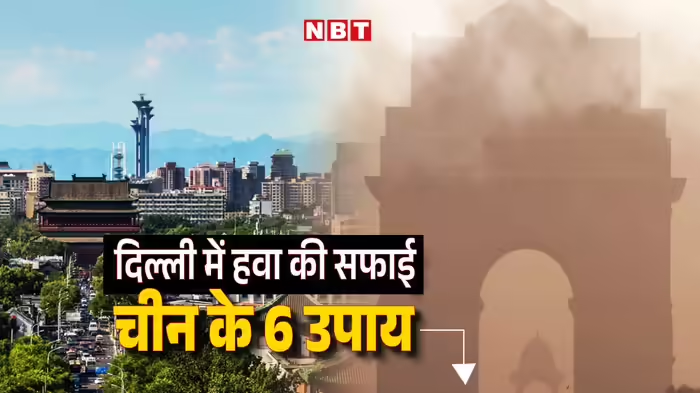
Delhi: The national capital continues to struggle under severe air pollution, with the Air Quality Index (AQI) on Wednesday recorded at 329, placing it in the “very poor” category. With GRAP-4 restrictions in effect, Chinese officials have shared a six-step masterplan that helped Beijing tackle similar pollution challenges, offering a potential blueprint for Delhi.
Vehicles Remain the Major Polluters
Research indicates that vehicular emissions are the largest contributors to poor air quality in Delhi. A spokesperson from the Chinese Embassy in India suggested adopting six measures successfully implemented in Beijing to curb pollution and improve air quality.
China’s Six-Step Strategy
- Strict Vehicle Emission Standards:
Beijing introduced ultra-strict emission standards (China 6NI, equivalent to Europe’s Euro-6), imposing strict limits on nitrogen oxides, particulate matter, and carbon emissions from petrol and diesel vehicles. Automakers were required to adopt advanced engine technology and filter systems, with heavy fines and removal from roads for non-compliant vehicles. - Phasing Out Old, Polluting Vehicles:
Old diesel trucks and buses, which contributed most to pollution, were gradually removed from streets. Incentives were provided for scrapping aging vehicles, and new low-emission or electric vehicles replaced them. - Limiting Vehicle Numbers:
Beijing implemented license plate lottery systems, odd-even schemes, and weekday driving restrictions to control the number of vehicles on roads. Although initially unpopular, these measures effectively reduced traffic and air pollution. - Strengthening Public Transport:
Massive investments were made in public transport, including developing one of the world’s largest and fastest metro networks and modern bus services reaching every corner of the city. Affordable, timely, and accessible public transport encouraged residents to reduce dependency on private vehicles. - Promoting Electric Vehicles (EVs):
China accelerated EV adoption by providing subsidies, tax exemptions, and creating an extensive charging network. EVs were also exempt from license plate lotteries, motivating people to switch. A large number of buses and taxis were converted to electric, substantially cutting daily emissions. - Coordinated Regional Strategies:
Beijing collaborated with neighboring Tianjin and Hebei regions to enforce shared pollution control policies. Stringent regulations were applied to industrial zones, power plants, and transport systems in surrounding areas, ensuring pollution reduction beyond city limits. Coal usage was restricted, industries faced strict guidelines, and regional monitoring systems were implemented.
Could Delhi Follow the Beijing Model?
With pollution levels reaching alarming levels in the capital, experts and officials are closely examining China’s multi-pronged approach. If adopted, these measures could help Delhi reduce vehicular emissions, promote clean energy, and improve air quality for millions of residents.
Discover more from SD NEWS agency
Subscribe to get the latest posts sent to your email.