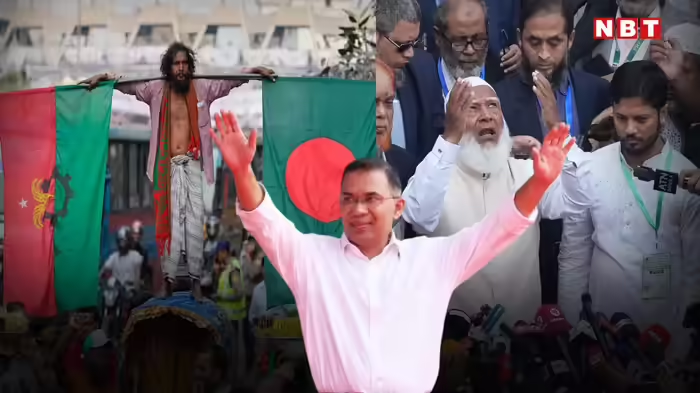
Dhaka, February 13, 2026: The Bangladesh Nationalist Party (BNP) has secured a decisive victory in the parliamentary elections, delivering a resounding message against extremist ideologies and external interference. Jamaat-e-Islami, which had received direct support from the United States and backing from student leaders and Muhammad Yunus, suffered a crushing defeat. The results underscore the electorate’s preference for mainstream, moderate political leadership.
Key Takeaways from the Election:
1. Mainstream Politics Prevail:
With the Awami League barred from contesting, BNP emerged as the only credible mainstream party. Winning over 200 out of 300 contested parliamentary seats, BNP’s success signals that the people of Bangladesh place their trust in moderate, mainstream political forces.
2. Women Voters Make Their Mark:
Bangladeshi women played a critical role in shaping the outcome, casting votes decisively against Jamaat-e-Islami. Across industries and regions, female voters viewed BNP as a stronger and more reliable choice for governance.
3. Western Influence Falls Short:
Despite active campaigning by international NGOs and support from the US-UK coalition for Muhammad Yunus and Jamaat, these efforts failed to sway voters. The so-called “July Charter Referendum,” designed to reform parliamentary processes, remains of uncertain impact, but foreign-backed interventions did not alter the outcome.
4. Tarique Rahman Poised for Premiership:
Following BNP’s historic win, Tarique Rahman, son of the late Khaleda Zia, is expected to become Bangladesh’s next Prime Minister. India has already initiated early diplomatic engagement, with Foreign Minister S. Jaishankar visiting Dhaka after Zia’s passing and Prime Minister Narendra Modi acknowledging her legacy. A stable and cooperative India-Bangladesh relationship is anticipated under Rahman’s leadership.
5. Jamaat Faces a Reality Check:
Jamaat-e-Islami’s “do-or-die” strategy failed despite the absence of the Awami League. Their attempt to present themselves as a reformed party, combined with alliances with the NCP and student factions, did not resonate with the electorate. While they won some seats, their overall influence has been severely curtailed.
6. Student Leaders Rebuffed:
One of the most striking outcomes was the rejection of the NCP, the student-led party formed in rebellion against Sheikh Hasina and supported by Muhammad Yunus. The electorate decisively turned against these young leaders, leaving them largely defeated.
The Big Picture:
BNP’s victory is a clear endorsement of mainstream governance and moderate politics in Bangladesh. It reflects voters’ rejection of extremism, foreign meddling, and divisive student-led movements. The election also keeps the door open for the Awami League to return to the mainstream in future political contests.
With Tarique Rahman at the helm, Bangladesh enters a new phase of political stability, signaling continuity in democratic processes and potential cooperation with neighboring India.
Discover more from SD NEWS agency
Subscribe to get the latest posts sent to your email.