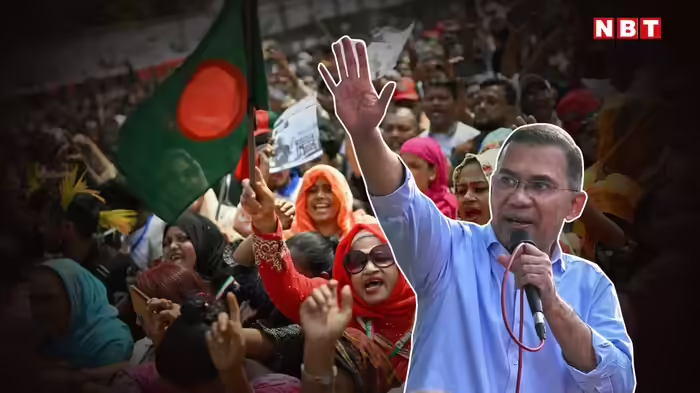
Dhaka, February 13, 2026: The Bangladesh Nationalist Party (BNP) has achieved a sweeping victory in Thursday’s parliamentary elections, signaling a return to political stability in the South Asian nation after 18 months of uncertainty. Tarique Rahman, son of former Prime Minister Khaleda Zia, is set to become the country’s next Prime Minister, returning after 17 years in exile.
According to early results, BNP has won 151 seats outright and is leading in over 120 others, while Jamaat-e-Islami has managed only 43 seats. The elections marked the first time in decades that the Awami League’s election symbol, the “boat,” did not appear on the ballot. BNP faced competition primarily from the Jamaat-led 11-party coalition, including the youth-driven National Citizen Party (NCP).
Tarique Rahman has promised to restore the rule of law and revitalize the garment sector, advocating a “new path” for national progress. Despite Jamaat-e-Islami’s efforts, the party failed to capitalize on the Awami League’s ban.
Top 10 Highlights of Bangladesh Elections 2026:
- BNP currently holds 151 seats and leads in over 120 others, while Jamaat-e-Islami has secured only 43 seats. Some results are still pending.
- Bangladesh has 350 parliamentary seats, 50 of which are reserved for women and filled based on party representation. Voting took place for 300 general seats, with 299 contested due to the death of one candidate. Polling for Sherpur-3 will be held later.
- This was the first election since independence where neither of the two former Prime Ministers, Sheikh Hasina nor Khaleda Zia, were present. Zia passed away late last year, and Hasina has been in India since August 2024.
- The Awami League, despite being barred from contesting, still commands 35–40% of popular support. Voter turnout was 48%, reflecting the impact of their boycott appeals.
- BNP’s main rival was the Jamaat-led 11-party coalition, which also included the NCP formed by student leaders after the fall of Hasina’s government. Internal divisions prevented them from gaining traction.
- BNP candidate Gayeshwar Chandra Roy could become the first Hindu MP from Dhaka-3 since Bangladesh’s independence in 1971.
- Two votes were cast this time: one for parliamentary seats and another for the “July Charter Referendum,” a reform initiative supported by all parties, proposing measures such as a maximum of two terms for Prime Ministers and caretaker governments 90 days before elections.
- According to local broadcaster Jamuna TV, BNP and allies have won 211 seats, achieving a two-thirds majority in Parliament. The Jamaat-e-Islami alliance won 70 seats, while other parties secured six. Of 299 contested seats, results for 287 have been declared.
- BNP Chairman Tarique Rahman has urged party workers to observe special prayers nationwide after Friday prayers and avoid victory rallies or public celebrations, according to press secretary Saleh Shibli.
- Jamaat-e-Islami leader Dr. Shafiqur Rahman stated that his party would accept the results if current trends continue, emphasizing national interest as the top priority. Early indications suggest some leads in key areas, but he cautioned that final results are pending.
With BNP’s decisive win, Bangladesh enters a new political chapter, potentially restoring stability and reshaping the nation’s future.
Discover more from SD NEWS agency
Subscribe to get the latest posts sent to your email.